Friday, November 5, 2010

Michael Tilson Thomas explores many faces of Aaron Copland


by Dwight Casimere

Chicago--Michael Tilson Thomas, music director of the San Francisco Symphony and guest conductor of the Chicago Symphony Orchestra Orchestra’s regular subscription programs of November 4-6, presenting a program entitled “Music of Aaron Copland,” is as close as possible to a musical and spiritual heir to the composer who is considered, in the words of the great American poet Virgil Thomson, the “president of American music.”

Thomas, the ten-time Grammy, Peabody and National Medal of Arts winner, presented a stirring concert of
Copland’s music, spanning nearly three decades. The works extended from Copland’s youthful attempts at experimentation, to his use of music as a vehicle for social commentary, to his later period of quiet reflection and minimalism. Thomas is renowned as the premier interpreter of Copland’s music and, since the death of Leonard Bernstein, is considered the preserver of his legacy.

“Most of us know Copland in his middle period, the so-called ‘Populist Era’ of the late ‘30s through ‘40s, when he expressed the unique character of the American spirit through works such as Appalachian Spring. But he was so much more than that,” Thomas said in impromptu remarks before the start of the program. “In his twenties, he was what we’d call today a ‘radical,’ testing the bounds of music, almost venturing into the avant garde. At times, his music was almost confrontational, as he embraced the new voices of his time. Then, in his later years, he reduced his composition to the elemental essentials, using only quarter notes and half notes. In the Orchestral Variations, which you’ll hear later in this program, he reduces his writing to permutations of the same seven notes played over and over again. (The work is widely considered one of the landmarks piano works of the twentieth century and CSO Principal Piano Mary Sauer illuminated its ground breaking passages with authority.)

“In his later years, Copland was trying to explore the melodic perception of people who had no musical knowledge whatsoever. He asked himself the question, ‘what song would a woman pushing a baby carriage sing to herself?” The music was stripped of any pretense or ornamentation. It was a new, liberal view of music that embraced 12 tonality in this late period.”

With that, he struck the downbeat for Copland’s Quiet City, with CSO members Christopher Martin, principal trumpet and Scott Hostetler on English horn. Martin delivered Copland’s piercing elongated lines with a complete mastery of breath control and melodic progression. The long passages burned with intensity yet, he imbued the quieter passages with a haunting subtlety. Hostetler’s passages dovetailed Martin’s with similar aplomb.

The following piece, Symphony for Organ and Orchestra, was an absolute masterpiece! Written when Copland was just 23 years old, the work prompted the great German-American conductor Walter Damrosch to declare to the audience, when he premiere the work in New York, “ Ladies and gentlemen, I am sure you will agree that if a gifted young man can write a symphony like this at twenty-three, within five years he will be ready to commit murder!” The drastic overstatement may seem a bit inappropriate by today’s standards but you get the point.

The highly unorthodox construction of the piece at times places the ‘solo’ organ in complete apposition to the orchestra, introducing minimalist themes that are expanded upon by, first the strings, then the brass, and finally the percussion sections in a succession of ebbing and flowing crescendos that were masterfully controlled by Thomas’s firm hand and exquisite sense of tempo.

The use of the harp and calliope to add sparkling tonal accents to the scintillating array of sounds created by organ soloist Paul Jacobs were further evidence of Copland’s genius.

In the final bars, Jacob’s organ playing invested the composer’s writing with a sense of gravity and deep expression that elicited heart-pounding emotion.

Copland’s beloved Appalachian Spring was the final piece on the program. It revealed yet another side to the composer's and Thomas’s aptitude. In his between performance remarks, Thomas noted that he had expanded the orchestration to Copland’s Orchestral Variations “under his direction,” referring to his association with Copland in Thomas’s formative years as a young composer.

The night’s performance of Appalachian Spring included middle passages, normally eliminated in performance, that interrupts the flow of the now-familiar Shaker melody ‘Simple Gifts’ (1848).

“Appalachian Spring was written at the height of the Second World War,” Thomas said in his onstage, introductory remarks, regarding the now-landmark piece that was introduced to the world as music for a ballet premiered by the great Martha Graham at the Library of Congress in Washington, D.C. The piece earned Copland a Pulitzer Prize for Music. “There’s a disturbing portion of music that interrupts the Shaker melody that is like the composer telling a young couple, embarking on their lives together, that life will not always be a bed of roses. ; that there are trials and tribulations ahead. Then, what follows is the familiar theme that is peaceful, almost serene.”

In Thomas’s deft hands, the final strains of Appalachian Spring softened into a reverence that became almost a benediction.

Thursday, November 4, 2010

Spirit of young love permeates Met La Boheme


Story by Dwight Casimere
Photos: Marty Sohl/Metropolitan Opera
1. Takesha Meshe Kizart as Musetta
2. Vittorio Grigolo as Rodolfo
3.Edward Parks as Schaunard and Shenyang as Colline
4. Maija Kovalevska as Mimi
5. Vittorio Grigolo and Maija Kovalevska as Rodolfo and Mimi
New York--Youthful vitality and terrific singing energizes the Metropolitan Opera's returning production of Giacomo Puccini's La Boheme. The opera is in an extended run at the Metropolitan Opera House in Lincoln Center,New York through Feb. 25. Millions around the world will experience La Boheme this season on the radio and the internet through distribution platforms established by the Met with various media partners. Sirius Channel 78 and XM Channel 79 will carry Metropolitan Opera Radio performances on December 8,February 7 and 22. The February 7 performance will also be available via internet streaming on the Met's web site at www.metopera.org.  Two of opera's most celebrated young stars sing the roles of Puccini's star-crossed lovers. Thirty-three year old Italian tenor Vittorio Grigolo is the impoverished poet Rodolfo in his Met debut through November. Young Latvian Soprano Maija Kovalevska is his fragile Mimi.Italian baritone Fabio Capitanucci is eloquent as the artist Marcello.
Franco Zeffirelli's production, a Met favorite since 1981, sets the action in an imaginative recreation of Paris's Latin Quarter in the 1830's. 
Conductor Roberto Rizzi Brignoli, in his Met debut,lifted Puccini's sweeping romantic score onto the stage right alongside the singers, making it a co-protagonist. Without use of the baton,he used arching,condor-like movements to dispense the composer's sparkling grace notes like fire flies against a nighttime sky.He shaped the swelling,heart-throbbing crescendos with the supple hands of a sculptor.
Tenor Grigolo sang the title role of Rodolfo as if he were revealing his personal emotional biography. The conviction in his voice and his graceful,yet purposeful panther-like movements across the stage recalled the screen performances of a youthful Pacino or present-day DiCaprio more than any operatic star in recent memory. Soprano Kovalevska could not have been a more touching Mimi. Her lost-soul cravings for love and connection reach out to the audience and draw them close to her consumption plagued bosom. They,along with Rodolfo, hope to rescue her from her impending doom.
La Boheme is without question one of the world's most beloved operas. When Rodolfo sings his opening aria, introducing himself to Mimi as,(paraphrasing)"a happy man, content with my dreams, my fantasies, my castles in the air," he elicits an immediate emotional response. The soul swells with joy and a feeling of emotional kinship. His unrealistic optimism and joie de vivre, even in the face of crushing poverty,is enviable. 
Similarly, the ensuing cafe scene set in the Latin Quarter,is a visual masterpiece with terrific staging by David Kneuss, lighting design by Gil Wechsler, elaborate costumes by Peter J. Hall and a lively performance by the superb Met Opera Chorus, honed by Chorus Master Donald Palumbo. The dancers and singers,particularly the young children, do an excellent job of establishing the festive air of the scene.
 The action of La Boheme is set on Christmas Eve, and its joyous feeling is intoxicating. It provides the framework for the dazzling entrance of the ravishingly beautiful African American soprano and Chicago native Takesha Meshe Kizart as Musetta in her Met debut. She sang and danced the famous Aria,"Quando me'n vo,"commonly known as Musetta's waltz, with flair,reeling off its dizzying high notes with abandon. She played the coquette with a natural air,devoid of diva-like affectation. Instead,she reached within to allow her simmering sensuality to emerge like the heat from a crackling Holiday fire.
La Boheme continues through February. Bulgarian soprano Krassimira Stoyanova will make her Met debut as Mimi December 1.  The role of Rodolfo will be sung over its long run by three outstanding tenors who are Met audience favorites. Joseph Calleja will be in his Met role debut in a December run. Piotr Beczala, whose Spring 2010 Rodolfo opposite Anna Netrebko led to sold out houses and rave reviews, will take over the role on January 31. Then, Ramon Vargas, who dazzled Met Live in HD audiences in the role in 2008, steps into the role February 17. For tickets and information visit www.metopera.org.

Monday, November 1, 2010

Met Opera Il Trovatore probes emotional depth of Verdi classic


by Dwight Casimere

Photo: Ken Howard/Metropolitan Opera

Metropolitan Opera’s current remounting of Giuseppe Verdi’s Il Trovatore digs deeply beyond the beautiful singing and lush orchestrations to reveal the opera’s dense, emotional heart. Staged brilliantly by director David McVicar, who set the action during the Peninsular War in Spain from 1808-1814 when violent protests erupted in Madrid against the French when Napoleon installed his brother to the Spanish throne and incited a bloody uprising.

The inspiration for the sets by Charles Edwards and costumes by Brigette Reiffenstuel were inspired by the artist Francisco Goya’s graphic depictions of the bloody conflict in a series of etchings, “The Disasters of War” and the painting “The Third of May, 1808.” The show curtain for Il Trovatore is a detail from Goya’s 1821 painting “Pilgrimage to San Isidro,”
in which random faces reflect the anguish and suffering of war.

Stage Director Paula Williams and Choreographer Leah Hausman do an exceptional job of creating a sensation of movement throughout this highly charged production.

An earlier announcement that Ms. Racette was suffering from a cold, asking the audience’s indulgence, proved entirely unnecessary as she sang brilliantly throughout the evening with silvery top notes and sustained, spine-tingling crescendos.

From the opening notes of the orchestra, conducted by Marco Armiliato, a veteran of more than 200 Met performances, the sense of tragedy and foreboding in Verdi’s taut score, is evident.

As the curtain opens, Spain is in the throes of Civil War. The commander of the Royalist troops, Count di Luna, sung forcefully by Serbian baritone Zeljko Lucic, is obsessed with Leonora, sung with inspired passion by American soprano Patricia Racette in her house debut. She, of course, is infatuated with thoughts of a young, rebel troubadour, Manrico, sung by the fiery Argentinean tenor Marcelo Alvarez in an electrifying performance. The count is determined to capture him. The two later duel, in a match choreographed with surprising realism.

The action quickly moves to the Gypsy camp outside Madrid, where Manrico’s mother, the gypsy Azucena, American mezzo-soprano Marianne Cornetti, in a show-stealing portrayal of both vocal and emotional power, nurses him back to health. She is haunted by the memory of the violent death of her mother, who was burned at the stake as a witch. Azucena exacts revenge by murdering a child whom she thought was the count’s infant son. It turns out that the child she threw into the burning pyre may actually have been her own, leading Manrico to doubt his own identity.

Count di Luna is seeking Azucena because of her subversive activities. At the same time, he is also seeking to eventually win Leonora at the expense of Manrico’s life and thus the tragic events of Il Trovatore are set in motion. Things come to a head when Di Luna’s henchman, Ferrando, Alexander Tsymbalyuk, in his Met debut, captures Azucena.

Audiences worldwide will have an opportunity to witness this thrilling production live from the stage of the Metropolitan Opera at Lincoln Center. The April 30 matinee will be transmitted to more than 1,500 movie theatres in more than 40 countries around the world, including Cinemark Seven Bridges in Woodridge, Illinois as part of the Met’s expanding Live in HD Series. For tickets and information visit www.metopera.org.

Sunday, October 24, 2010

Met Live HD Boris Godunov a sweeping epic


by Dwight Casimere

Photo by Ken Howard/Metropolitan Opera

Metropolitan Opera’s sweeping epic, Boris Godunov by Modest Mussorgsky, was the second Met: Live in HD presentation in theatres around the globe, with an Encore presentation scheduled for Wednesday, November 10 at 6:30pm. Although the production is four and a half hours long, it is so absorbing that the time seems to fly by. The production by Steven Wadsworth is minimalist, by Met standards, but taut, with great dramatic pacing and a terrific cast of singers. German bass-baritone Rene Pape gives the performance of his career, particularly in the mad scene at the end of Act II. It is one of the finest moments of the season. Commenting on the just completed performance during a backstage interview with Met backstage reporter and Met soprano Patricia Racette, Director Stephen Wadsworth described Pape as “a thoroughbred. When we let him out of the gate, he seizes the role and runs with it. There’s no stopping him once his power is unleashed.”

Set designer Ferdinand Wogerbauer provided a bleak, almost blank canvas landscape that allowed the complex drama unfold without any distraction. Where sets may have receded in importance, the costumes by designer Moidele Bickel more than made up for it. They were lavish and colorful with a fullness of expression that matched the over-the-top passions of the characters.

Based on the novel of the same name by that great chronicler of the Russian experience under Tsarist rule, Alexander Pushkin, the story tells of the ill-fated reign of the late 16th century Czar, Boris Godunov, who allegedly came to power after ordering the assassination of the young heir-apparent. The specter of murder hangs in the air and eventually drives Godunov mad. Before he succumbs, he prays for forgiveness and places his son on the throne.

There were impressive performances throughout. Tenor Aleksandrs Antonenko was the most stellar of the virtually all-Russian cast (with the exception of Pape, who is German). His silvery tenor voice seemed to gleam in the upper register in his role as Grigory/Dimitry. His rapacious lover, Marina, sung by mezzo-soprano Ekaterina Semenchuk, best summed up her own performance in the one-word answer she gave to backstage interviewer Racette; “Sexy!”

Bass Vladimir Ognovenko gave a lively performance as the errant monk Varlaam and Tenor Andrey Popov knit the whole thing nicely together with his conscientious reading as The Holy Fool. Boy alto Jonathan A. Makepeace showed the promise of a great operatic talent in the making as Godunov’s son Feodor.

Conductor Valery Gergiev, a veteran of countless performances of Russian repertoire and a frequent collaborator with Rene Pape, did a stellar job of bringing Mussorgsky’s forceful score to life. “At times we are leading the singers,” Gergiev told Racette backstage. “Every step of the way its important that we keep the story moving.” Mission accomplished!

Boris Godunov encores the Met Live in HD series Wednesday, November 10 at 6:30pm. Performances at the Met continue through March 17. The opera was so compelling that I plan to be there in person for one of the final fall performances at Lincoln Center.

Saturday, October 23, 2010

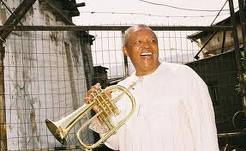
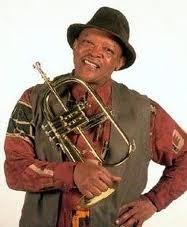
Hugh Masekela still 'Doin' It' for Freedom


Story by Dwight Casimere

The name of trumpeter/composer Hugh Masekela is as indelibly tied to the freedom fight of his native South Africa, as is that of his late, former wife, singer Miriam Makeba and, more famously, that of former South African President Nelson Mandela. In many ways, their lives and the fate of their country are as intertwined as the plotlines of a Robert Altman film.

The same can be said for Masekela’s music. Although steeped in the early straight-ahead jazz traditions of Dizzy Gillespie, Miles Davis and Charlie Parker, his music is also informed by the new jazz avant-garde leanings of Lester Bowie and Don Cherry. In fact, over his more than half-century career, he has performed and recorded with many of them and other jazz legends.

Yet, Masekela stands alone. Best remembered for the blazing 1968 crossover pop/jazz hit, Grazin’ In The Grass, composed by fellow countryman Philemon Hou, his SBC Symphony Center Presents concert revealed that his music is so much more. It is a at once an autobiography and a journal of his people as well as a living bibliography of the growth of modern jazz and world music and their umbilical ties to Mother Africa.

From the very beginning, Hugh Masekela’s life and music were intertwined with the struggles, conflicts and sorrows of South Africa. Following a successful tour of South Africa with the Manhattan Brothers, he toured with the blockbuster musical King Kong for a sold-out year with Miriam Makeba, who would later become his wife. King Kong went to London’s West end and the rest, as they say, is history.

Masekela played the Flugelhorn, a stylized version of the trumpet, which has a larger bell and a wider, overall aspect, which gives it a deeper, mellower sound. High notes are rounded in such a way that they don’t give off the piercing sounds of the trumpet in the upper register. The instrument perfectly matches the deepening, mellow tone of Masekela’s voice, which he, at times, intoned like an ancient wind instrument.

It’s hard to believe that Masekela is 71. He danced with fluid, seductive movements while singing in various languages of his homeland—Zulu, Xhosa, Afrikaans and Shangaan, to name a few. Most told of the hardships of suppression under apartheid. Not one word was understood by anyone in the largely African American audience, but they seemed to get the import of his message quite clearly.

There were whoops and yells when, near the end of one song, Masekela “dropped it like it was hot” after an energetic exchange with the bass guitarist. Playing rhythms on a cowbell and singing in chant-like repetition “Doin’ It” his conveyed a message that was at once sexual innuendo and political manifesto. “They’re doin’ it in Namibia!” he said to loud applause, referring to the struggle of the people of Namibia to regain their birthright and their homeland after centuries of colonization and oppression.

There were moments of levity and, of course, a reprisal of the song that has become his personal anthem, Grazin’ in the Grass, which sent everyone dancing the Toyi-Toyi out of the doors of Symphony Center into the cool, moonlit night on Michigan Avenue.

Tuesday, October 19, 2010

Michael Tilson Thomas charts new course for his New World Symphony


by Dwight Casimere

Photo #1-Michael Tilson Thomas conducts his New World Symphony

Photo #2-Maestro Thomas accepts the National Medal of Arts from President Obama

Photo #3-Michael Tilson Thomas-photo by Stefan Cohen

Photo #4-Frank Gehry designed new campus and performance hall for New World Symphony in Miami Beach-photo by Dwight Casimere

Miami Beach—The esteemed conductor Michael Tilson Thomas is making music history in Miami’s South Beach. In just a few months, he and his New World Symphony, the orchestral academy he co-founded with Ted Arison in 1987, will move into their new performance hall and campus, designed by famed architect, Frank Gehry creator of the Guggenheim Museums in New York City and Bilbao, Spain and the Walt Disney Concert Hall in downtown Los Angeles.

Thomas’ vision was to do more than chaperone a mere “student orchestra”, but to create an environment and a curriculum that will produce musicians who will become the leaders of the industry in the 21st Century. Based on the performance billed as “MTT’s Lincoln Farewell Concert” in the familiar Art Deco theatre building on South Beach’s popular Lincoln Road Mall, the orchestra and its concept have matured into a viable medium.

The concert began with a modern work, Steven Mackey’s 1993 composition, “Eating Greens,” with the composer listening in and trading witty barbs with Maestro Thomas on the significance of the work via live video satellite, a high-tech touch that will no doubt be a staple at the new forward-looking facility now in the final stages of completion just half a football field away.

“This was the piece where I most felt like me,” Mackey told Thomas and the audience via the video hook-up. “Since I wrote the piece nearly 18 years ago, I hardly think of it as ‘new music’ anymore. In fact, I really thought of the piece as being influenced by my background as an electric guitarist. In writing “Eating Greens,” I tried to synthesize that sound through the orchestra and make the orchestra one giant electric guitar.” The composition uses the solo saxophone, a rarity in ‘classical’ music composition, and thematic material borrowed from Christmas carols, popular jingles and even some of the errant sounds of twentieth and twenty-first century life, like the sound of a dial tone and the mechanical-voice intonations of a telephone operator after an incorrect number is dialed. “So much of twentieth century music inhabits the dark places that are sort of creepy. I come off as sort of a maverick because I prefer to look at the music through the apotheosis of the dance. Sort of the way Shakespeare tried to examine the problems of the whole world by looking at it in little pieces.”

Thomas and the New World Symphony took the audience on a joyous romp through Mackey’s musical excursion of Religion, Art, Food, Bread and Wine and a final Homage to jazz icon Thelonius Monk entitled “Drunk Monk.” At the conclusion of the performance Mackey feigned embarrassment, jokingly holding a copy of the score over his face while the audience applauded.

Cello soloist Lynn Harrell’s nimble fingers seemed to float effortlessly over the strings and fingerboard of his 1720 Montagnana cello. The sound he created in his almost poetic reading of Peter Ilych Tchaikovsky’s Variations on a Rococo Theme for Cello and Orchestra captured the work’s song-like qualities. Harrell’s sound was less like that of an instrument. Instead, he filled the auditorium with a heavenly sound like a vocalist singing a song without words.

Beethoven’s Symphony No. 7 brought out the dancer in Maestro Thomas as he explored the lilting summery interludes of the work the ailing composer undertook while vacationing at a Bohemian spa in the summer of 1811. It turned out to be the calm before the storm the composer’s life would become in his ensuing, final years. This was the ailing Beethoven coming back to life with a spirit of rejuvenation and hope. What a fitting farewell to the lovely, cozy Art Deco space that had been home to Thomas’s fledgling New World Symphony these last 20-odd years before embarking on a new chapter in the organization’s musical life.

Ten-time Grammy winner Michael Tilson Thomas will appear as guest conductor of the Chicago Symphony Orchestra November 4,5 & 6 in a program of Barber, Ives and Gershwin. There will also be a Pre-concert Bonus Organ Recital by Paul Jacobs.

Maestro Thomas will also appear in Chicago November 2 at an inaugural fundraising event at Symphony Center entitled Fall In Love With Music. It will feature an afternoon appearance by Maestro Thomas, where he will comment on the music of Gershwin, Ives and Barber. There will also be a champagne reception and luncheon, followed by a chamber music performance of string quartets by the composers, performed by the Lincoln Quartet, a resident string quartet consisting of members of the Chicago Symphony Orchestra. For tickets and information, visit www.cso.org.

Tuesday, October 12, 2010

Met Live in HD Rheingold realizes Wagner's vision


by Dwight Casimere

Photos: Ken Howard/Metropolitan Opera

New York-It’s hard to believe that Das Rheingold (The Rhine Gold) by Richard Wagner, premiered in 1869. From the moment Met Opera Music Director and Conductor James Levine lifts his baton to begin the overture to the first of the four operas in The Ring Cycle, entitled Der Ring des Nibelungen (The Ring of the Nibelung), the opera has an urgency that speaks to this time. This is the first new Met production of Das Rheingold in more than two decades. Directed by Robert Lepage, this production seems to finally realize the expansive vision of its creator. Wagner’s Die Walkure comes on April 22.

Presented Live in HD, it is a multi-media extravaganza. The new production uses an arsenal of cutting-edge technology. Combined with the musicianship and artistry that is the hallmark of Metropolitan Opera, this ‘Ring’ embodies the very definition of the term “Grand Opera.”

Digital video images, acrobatic dancers performing as if suspended in space, sets that transform and evolve like technical “dissolves” in cinema, not only dazzle the eye, but engage the viewer’s psyche. The production scans the complete visual and emotional landscape of Wagner’s mythical representation of life among the gods.

The dramatic singing features an all-star cast headed by the regal Welsh bass-baritone Bryn Terfel as Woton, the lord of the gods,The American mezzo-soprano Stephanie Blythe is his wife, the goddess Fricka, the dynamic African-American bass-baritone Eric Owens is the Nibelung dwarf Alberich, who eventually becomes their enslaver, American soprano Wendy Bryn Harmer is Freia, who is ransomed as payment for the building of Wotan’s dream castle and American tenor Richard Croft is the capricious Loge, the god of fire. Their voices add to the onstage fireworks.

There is much about this new production that is informed by modern cinema. For example, Loge’s costume and demeanor echoes that C-3P0 in George Lucas’s Star Wars. There are elements of visual craftsmanship and execution that approach James Cameron’s landmark creation, Avatar. There are also echoes of Peter Jackson’s Oscar-winning film trilogy, “The Ring.” The scene of the mermaids, acrobatic dancers suspended in mid-air on guy-wires “swimming” through a digitally created ocean, is one shining example of the film-like technical wizardry.

Vocal performances match the superior quality of the visual elements at every turn. Bass-baritone Eric Owens is especially noteworthy as the sardonic Alberich. To this reviewer, who is African American, his words as he dons the helmet fashioned from the gold ring and proceeds to enslave the Nibelungs are imbued with added gravitas.

This is a production that has the ring of historic significance throughout. All live performances at the Met are sold out, but, thanks to the Peabody and Emmy Award-winning series, The Met: Live in HD, the opera will be shown in an encore performance Wednesday, October 27 at 6:3pm local time, in more than 100 theatres in North America and across the globe, including the Cinemark at Seven Bridges in Woodridge, Illinois and AMC River East 21 in Chicago.

For ticket information, visit www.metoperafamily.org or www.fathomevents.com.