"IN THEIR FOOTSTEPS" A TRIBUTE TO MARIAN ANDERSON, BETTY ALLEN, GEORGE SHIRLEY AND WILLIAM WARFIELD
Curated by New York Philharmonic The Mary and James G. Wallach Artist-In-Residence
Eric Owens
Reviewed by Dwight Casimere
Eric Owens backstage at the Metropolitan Opera House and (below) as Alberich in Wagner's Das Rheingold
NEW YORK--"In Their Footsteps: Great African American Singers And Their Legacy" was a celebration by the New York Philharmonic of the legendary voices of artists of color from the last century; Marian Anderson, Betty Allen, William Warfield and George Shirley, who was in the audience to receive thunderous adulation.
Curated by esteemed Metropolitan Opera Baritone and the Philharmonic's The Mary and James G. Wallach Artist-In-Residence Eric Owens, the concert not only celebrated the voices of the past, but gave attendees an opportunity to hear some of the greatest black voices currently gracing concert stages and opera houses around the globe.
African American artists are no strangers to the New York Philharmonic Stage and its newly named David Geffen Hall. Marian Anderson appeared with the orchestra on multiple occasions before her historic debut at The Metropolitan Opera in 1955. William Warfield similarly, was a frequent and beloved figure on both stages. Yet, there is no denying, there is still much work to be done.
The concert featured a stellar cast of singers in repertory linked to each of the named legends. Most notable was the Philharmonic's long overdue debut of selections from Scott Joplin's opera "Treemonisha", an overture that masterfully blended classical motifs with ragtime, which was conducted with exhuberance by Conductor Thomas Wilkins in his New York Philharmonic debut.
Soprano Laquita Mitchell dazzled as the soloist in the 1910 aria, "The Sacred Tree."
Mitchell, in her New York Philharmonic Debut, is no stranger to opera lovers. She was hailed by the New York Times for her portrayal of Violetta in Verdi's La Traviata in NewYork City Opera's 2012 season. She can also be seen on San Francisco Opera's DVD of her performance as Bess in Porgy and Bess, which opened their 2014 season.
Soprano Laquita Mitchell with Eric Owens in the title roles in San Francisco Opera's Porgy and Bess
All of the singers have significant pedigree anda long list of operatic and symphonic triumphs with major orchestras and opera companies around the world.
Besides being the Philharmonic's artist-in-residence, Eric Owens has appeared with the Metropolitan Opera in Wagner's "Der Ring des Nibelungen" as Alberich in the opera Das Rheingold in the 2010 season. He will appear as Orest opposite legendary Mezzo Soprano Waltraud Meyer in Richard Strauss's Elektra April 14-May 7, 2016 at the Met.
A two-time Grammy Winner (Best Opera 2012-Wagner's Der Ring, Deutsche Gramophone, 2011-Adams: Doctor Atomic, with the Met), Owens is also the 2003 winner of the Marian Anderson Award and took First Prize in the Placido Domingo Operalia Competition.
Owens, who gave his own pre-curtain 'artist indisposed' speech, due to a bronchial condition, none-the-less sang brilliantly, reprising his own triumphs, and those of baritones past, in Gershwin's Porgy and Bess in a scintillating duet with Laquita Williams in "I Got Plenty O' Nuttin'" and "Bess You Is My Woman Now." He later channeled the late, great William Warfield in the show-stopping "Ol Man River" from Jerome Kern's Show Boat.
Tenor Russell Thomas gave a commanding reading of the emotive lecture "Wrong Is Never Right" and soared in "Ingemisco" from Verdi's Requiem.
All of the singers gave stand-out performances, with each one eclipsing the previous.
Janai Brugger, the 2013 Placid Domingo Competition winner, gave a shimmering rendition of Bach's "Ave Maria."
The entire cast came together in a celebratory rendition of a selection from Aaron Copland; "Simple Gifts" from Old American Songs, historically premiered by William Warfield in 1955 at the Philharmonic, and later famously recorded in by him in 1958. The orchestra concluded with Wilkins conducting a rousing Selection from Copland's Appalachian Spring Suite.
The Dorothy Maynor Singers of the Harlem School of the Arts made an impressive showing in their New York Philharmonic Debut.
It was a wholly satisfying evening that made one yearn for more representation of these great artists on the world's major musical stages.
Thursday, October 22, 2015
Wednesday, October 21, 2015
Thursday at Chicago Film Festival Profiles Personal Sacrifice for Dining Excellence, Abuse of Women in Palestine
Thursday October 22 lineup includes DOC Milano 2015, For Grace about Chicago super chef Curtis Duffy, and Degraded, a dramatic look at the turmoil in Palestine and its effect on women
by Dwight Casimere
Chef Curtis Duffy in the Documentary/Food film FOR GRACE, screening at Chicago Film Festival
The 51st Chicago International Film Festival continues with a Thursday, October 22 lineup that reprises some of the memorable titles of its opening week, such as Motley's Law (2:30pm) and A Very Ordinary Citizen (4pm), but profiles the struggles of Michelin-starred Chicago Chef Curtis Duffy and his struggles to open his dream restaurant in FOR GRACE, screening at noon at the AMC River East 21. As seen through the cinematic eyes of Chicago Tribune James Beard nominated food critic Kevin Pang and filmmaker Mark Helenowski, the film documents the struggles of Duffy to perserver in the demanding world of haut cuisine restaurants against the backdrop of a troubled life. Plagued by personal demons in high school that led to him taking refuge in the kitchen, Duffy lost his wife and children and a huge chunk of his emotional stability and self-esteem to pursue his dream. Pang and Helenowski use their camera to probe deep below the emotional layers of a complex individual with more stamina and can-do spirit than he probably has lucky chances. It all adds up to a celebration of not only the art of cuisine, but a triumph of the human spirit against all offs. Screening at AMC River East 21 at 3:30pm with a repeat Monday, October 26 at 5:30pm.
The famed opera house La Scala is depicted in the Architecture Documentary Milano 2015
The screening day begins at Noon with the Architecture Documentary Milano 2015. From producer Cristiana Mainardi and a team of directors, incuding Roberto Bolle, Silvio Soldini, Walter Voltroni, Cristina Capotondi, Lionello Carri and Giorgio Divitto, the film is a sort of visual cinematic fresco that looks at the architectural, cultural and spiritual soul of the great architectural, artistic and industrial city of Mlan through the images of its fantastic building, its art and its people. The camera creates a collage of images from the highest skyscrapers in Milan, to the excellence of its theaters and the great opera house, La Scale, to the cloistered walls of a nunnery to the streets of Milan and the lingering faces of its habitués to the pristine countryside of Lambardi. The six directors combine their images and sensibilities to weave a varied portrait of an historic city and its variegated people. 103 minutes. In Italian with English subtitles. It screen Thursday, October 22 at noon.
A scene from the France/Palestine drama DEGRADE which is a World Cinema presentation
The piece de resistance of Thursday's screenings is the France/Palestine chamber drama DEGRADE from directors Tarzan and Arab Nasser. The film takes place entirely in the cramped quarters of a beauty shop in the war-torn Gaza Strip. "Fried Green Tomatoes" it is not! The story features a panoply of Arab women trapped inside the beauty salon, attempting to go about their weekly beautification rituals while the vagaries of the political conflict outside are waged in varying degrees of danger. The ironies within are only overshadowed by the atrocities that occur without. Yet, the women continue their interpersonal banter, recounting failed affairs, miscarriages, loves lost, even illicit affairs. It's amazing how we westerners consider those in the Middle East so different, yet, to hear the stories of these women, except for the suicide bombs and gunfire outside (unless you're in Englewood or the West Side of Chicago), this slice-of-life drama could have happened anywhere. There's a ton of incongruous thoughts, actions and characters, which melds comedy with tragedy. Like the arduous resistance leader, hunted by Hamas, who sits outside the beauty shop attempting to woo its owner, a pet lion on a chain in tow, which he occasionally use to menace the women to get their attention. There's also the pregnant woman, constantly experiencing labor pains, whose set to deliver at any minute, while the war rages outside.
Then there's the drug addicted house wife, whose having an affair and encouraging the devout, prayerful woman-in-a-burka sitting next to her to try some artificial heroine. Another pair of women are getting all dolled up for either their weddings, or a date on the sly with a new beau. (It probably won't happen though. All the roads are closed by the constant combat outside.) Yet, they continue to get gussied up, even after the lights and power go out multiple times and the gunfire outside rages on with varying degrees of mounting personal danger.
If you're a devotee of foreign films and film festivals, you'll instantly recognize foreign film icon Hiam Abbass, a bit older, but still captivatingly beautiful! This film takes you right to the barricades of the Gaza Strip, with all its ironies, absurdities, comedy and tragedy, where you'll leave your heart. DEGRADE screens Thursday October 22 r 6:15pm, Friday October 23 at 8:30pm and Friday, October 28 at 12:30pm.
MET LIVE HD "OTELLO" IN ENCORE PERFORMANCE IN THEATRES WEDNESDAY OCTOBER 21 AT 6:30PM LOCAL TIME
Met Season Opening production sheds new light on the plight of Shakespeare's fallen Moor in Verdi opera
NEW YORK--The Met Live HD performance of Giuseppe Verdi's OTELLO occurred several week's after the Season Opening Gala Performance of Broadway Tony Award winning director Bartlett Sher's black face-less production, so the controversy over the choice had died down. Therefore, audiences at this week's Live HD performance could simply sit back, relax and enjoy one of the finest renditions of the live cinema-for-opera medium, directed by veteran television Live Cinema Director Gary Halvorson (tv's Two and Half Men, ABC Sports).
Having seen the production both live at the Met and in the movie theatre, it became apparent how readily Shakespeare's drama lends itself to the medium of Live Cinema. Set to operatic libretto and orchestration by Guiseppe Verdi, with a set designed by Es Devlin, Costumes by Catherine Zuber, and production design by Luke Halls, the production seemed to sparkle with renewed vitality when viewed through the dozen or so lenses of Halvorson's cameras and his team of directors. They employed camera angles from every corner of the opera house, from the raptors, to behind stage and used cameras on runners, like those used to follow runners during the Olympics, which Halvorson revealed in an interview in a film segment shown during the intermission about his behind-the-scenes camera work.
Met baritone Eric Owens was the superb backstage host and interviewer. His pre-broadcast comments set up the ensuing action with insightful commentary and he had a brilliant command of the Russian, Serbian and Italian languages in introducing the singers and their characters in the production. His questions during the backstage interviews were well thought out and allowed the singers to elucidate their personal thoughts on the elements of the production. Its notable that the capacity movie-theatre audience listened with rapt attention to all of the backstage commentary and stayed on to watch the behind-the-scenes video on Gary Halverson and his crew's elaborate preparations and execution of Met Live HD productions.
The use of Halvorson's cameras heightened the drama, especially in the early scenes when the singers are paired off in simultaneous exchanges where key points are made concerning the plot in parenthetic vocal statements. The camera was able to zero in on each of the paired singers, so that you could keep up with the action and the unfolding of Iago's devious plot. A sweeping slow pan of the chorus, meanwhile, made what was otherwise a very static stage setting on the Met stage, appear more mobile and visual join the cinematic setting.
Aleksandrs Antonenko, with his stentorian voice and robust demeanor, could not have made for a more commanding Otello. His voice literally rang forth above all the others in the ensembles and his acting capabilities seemed light years above the somewhat wooden performance he gave on Opening Night. The fact that he was not in darkened makeup was of little concern, as one got deeper into the layers of the character as it unfolded in his superb portrayal. To tell you the truth, the time I saw Placido Domingo play the role some years ago, I found the getup distracting. Antonenko's appearance, in fact, is not too unlike that of many Moors I observed during my trip to Morocco a few years ago. If he were to walk down a street in Marrakech, he'd blend right in!
On with the rest of the production. The beauteous Sonya Yoncheva gave an intuitive portrayal of Desdemona. As she revealed in her backstage interview with Owens, she wanted to portray her character as a strong woman, who is firm in her conviction that she is innocent of the claims of infidelity engineered by Iago (Zeljko Lucic, in a deliciously villainous performance), and foolishly believed by the vainglorious Otello. Her Ave Maria
The unraveling of Otello's mental state is perfectly built up over the course of the opera as it swells toward its tragic conclusion. Conductor Yannick Nezet-Seguin was masterful in his handling of Verdi's lush, multi-layered score. In other less-skilled hands, the music could have crushed the production under the sheer weight of its complexity. In Nezet-Seguin's capable hands, it was at times dark and forbidding, with flashes of light, that underscored the needless tragedy created by Iago's cunning, feeding on Otello's fragile, twisted ego. His (Iago's) rueful declaration to the Cypriot's cry, praising the "Lion of Venice' as he stands over an Otello, crumpled by the weight of his encroaching insanity, "Behold The Lion!" is one of the high points of the operatic drama.
If you were already at the original MET LIVE HD cinema cast, it wouldn't hurt to see it again. I certainly plan to. Verdi's Otello, MET LIVE HD, Wednesday, October 21, 6:30 pm local time. Check local theatre listings. Visit metopera.org or fathomevents.com
Tuesday, October 20, 2015
The Philadelphia Orchestra at Carnegie Hall
Philadelphia Orchestra Music Director Yannick Nezet-Seguin leads an inspired program of Grieg, Bartok and Sibelius
Reviewed by Dwight Casimere

NEW YORK--The Philadelphia Orchestra Music Director Yannick Nezet-Seguin is one busy young conductor. Besides leading performances of Verdi's Otello at the Metropolitan Opera, which recently concluded performances, he joined his 'home team' across town for the orchestra's first appearance of the season at Carnegie Hall. In every way, the performance bristled with excitement and suspense.
First, the suspense part. Orchestra members had just signed a new contract the day prior to the concert, which averted the possibility of a strike and cancellation of the concert. Nezet-Seguin himself has renewed his commitment to the orchestra with a deal that has him at the podium through the 2021-2022 season. So much for the behind-the-scenes cliff-hangers. The real drama unfolded on the stage of the Isaac Stern Auditorium with a thrilling program of Edward Grieg's Peer Gynt Suite No. 1, Bela Bartok's heroic Violin Concerto No. 2 with Philadelphia Orchestra favorite and Grammy-winner Gil Shaham as soloist and Jean Sibelius's stirring Symphony No. 5 in E-flat as the conclusion. It was an exciting evening of great, inventive music at every turn.
Nezet-Seguin is a conductor who finds the rhythmic heart of a piece and isn't afraid to break out in a sort of balletic dance at the podium to emphasize his point. He marshaled the full force of the orchestra's legendary brass section to give the "In The Hall of the Mountain King" section all of the pre-Halloween atmosphere it is famous for.
Gil Shaham used the full power of his interpretive skills to imbue Bartok's moody Violin Concerto with a sense of controlled passion. The music spans the breadth of human emotions and Shaham's playing expressed them with lucidity.
Sibelius's Symphony No. 5 is an almost impressionistic tone poem. Nezet-Seguin utilized all of the orchestra's superb soloists and section leaders to great advantage. He gave the piece a luster that allowed each of its shifting themes to shine in the shimmering light. He built a dramatic tension throughout that showcased that famous "Philadelphia Sound."
The Philadelphia Orchestra returns to Carnegie Hall for three additional programs this season. Visit carnegiehall.org for details.
Reviewed by Dwight Casimere

NEW YORK--The Philadelphia Orchestra Music Director Yannick Nezet-Seguin is one busy young conductor. Besides leading performances of Verdi's Otello at the Metropolitan Opera, which recently concluded performances, he joined his 'home team' across town for the orchestra's first appearance of the season at Carnegie Hall. In every way, the performance bristled with excitement and suspense.
First, the suspense part. Orchestra members had just signed a new contract the day prior to the concert, which averted the possibility of a strike and cancellation of the concert. Nezet-Seguin himself has renewed his commitment to the orchestra with a deal that has him at the podium through the 2021-2022 season. So much for the behind-the-scenes cliff-hangers. The real drama unfolded on the stage of the Isaac Stern Auditorium with a thrilling program of Edward Grieg's Peer Gynt Suite No. 1, Bela Bartok's heroic Violin Concerto No. 2 with Philadelphia Orchestra favorite and Grammy-winner Gil Shaham as soloist and Jean Sibelius's stirring Symphony No. 5 in E-flat as the conclusion. It was an exciting evening of great, inventive music at every turn.
Nezet-Seguin is a conductor who finds the rhythmic heart of a piece and isn't afraid to break out in a sort of balletic dance at the podium to emphasize his point. He marshaled the full force of the orchestra's legendary brass section to give the "In The Hall of the Mountain King" section all of the pre-Halloween atmosphere it is famous for.
Gil Shaham used the full power of his interpretive skills to imbue Bartok's moody Violin Concerto with a sense of controlled passion. The music spans the breadth of human emotions and Shaham's playing expressed them with lucidity.
Sibelius's Symphony No. 5 is an almost impressionistic tone poem. Nezet-Seguin utilized all of the orchestra's superb soloists and section leaders to great advantage. He gave the piece a luster that allowed each of its shifting themes to shine in the shimmering light. He built a dramatic tension throughout that showcased that famous "Philadelphia Sound."
The Philadelphia Orchestra returns to Carnegie Hall for three additional programs this season. Visit carnegiehall.org for details.
Maurizio Pollini at Carnegie Hall: The Triumphant Return of Piano Master
Reviewed by Dwight Casimere
NEW YORK---Those who packed Carnegie Hall to see Italian pianist Maurizio Pollini, in a long-anticipated appearance, were not disappointed. They were treated to the spectacle of a master craftsman at work. The few barely noticeable flubs in execution were overshadowed by the deep emotional connection and intelligent interpretation in the nearly all-Chopin program.
Pollini settled into the afternoon with Robert Schumann's Allegro in B minor, followed by an impassioned reading of his Fantasy in C. His ability to allow the contrasting themes in the former to ring with clarity, showed his superior pianism.
Polonaise Fantaisie in A flat major gave a clear indication of what was to come. Majestic chords were followed with inventive themes that darted here and there with curious exploration. Pollini made this time-honored work seem fresh and alive.
It was on to the business at hand in the second half of the program. The audience had come to hear his masterful interpretations of Chopin and Pollini did not disappoint. He aptly portrayed the swaying motion and dreamy Italian romanticism of the Venetian gondolier songs which are at the heart of the work.
His skill at interpretation and technique were most evident in the ensuing Nocturnes in F minor and E flat, in which he contrasted lyrical themes with restless invention. The concluding Scherzo No. 3 was bright and lyrical throughout.
The enthusiastic applause Pollini received brought three encores that brought a satisfying conclusion to the performance; the Etude "Revolutionary," Ballade No. 1 and the Nocturne in D flat, all played with uncanny skill and aplomb. Pollini returns to Carnegie Hall Tuesday, October 25 with a program of Beethoven and Schoenberg. It is not to be missed. For information, visit carnegiehall.org.
Friday, October 16, 2015
Friday, October 9, 2015
51ST CHICAGO INTERNATIONAL FILM FESTIVAL OCTOBER 15-29
The 51st
Chicago International Film Festival presented by Cinema Chicago begins
Thursday, October 15 and runs through Thursday, October 29th. Festival passes and individual tickets
are available online at chicagofilmfestival.com or
ticketmaster.com/chicagofilmfestival, at the Festival Hotline, 312-332-FILM
(3456) or at the Festival box offices, AMC River East 21 , 322 East Illinois
St., or the Festival Office, 30 East Adams, Suite 800 in Chicago.
Featuring
130 films from over 50 countries, the festival is highlighted by 6 World
Premieres, 10 North American Premieres, 27 U.S. Premieres and over a hundred
Chicago Premieres.
This is
the longest-running international competitive film festival in North America
and, as in festival’s past, there are more than a few landmark events planned
as well as some surprises.
Opening
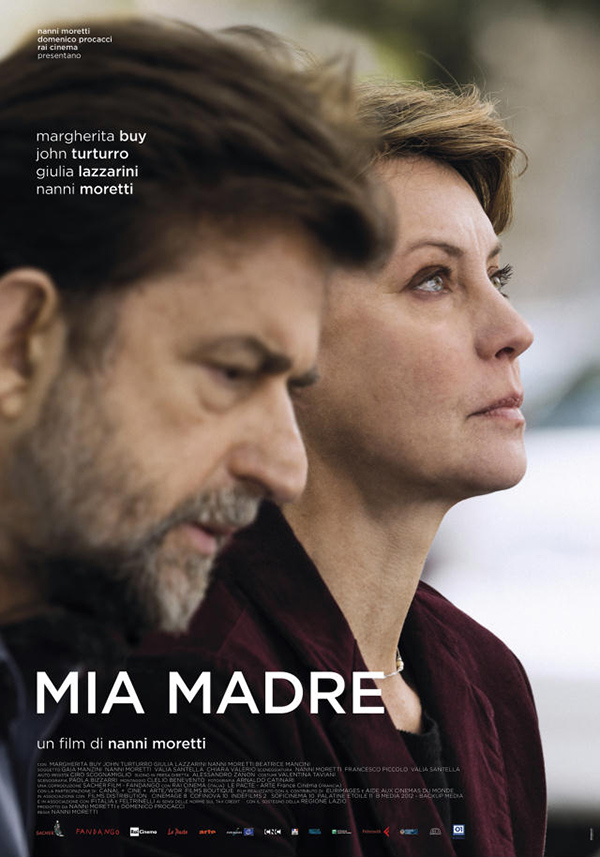
Night, Thursday, October 15th from 5:30pm-10:00pm is the screening
of the film MIA MADRE from master film director Nanni Moretti, at the
Auditorium Theatre, 50 East Congress Parkway, Chicago. John Turturro provides
the comic relief as the self important American actor in this film about the
violent clash of art with reality. The film is a personal tour de force that
details the struggles of a harried director who tries to complete her new movie
while caring for her beloved mother, who lies dying in the hospital. The film
makes a powerful statement about
the personal cost of artistic integrity.
Among the films receiving its World Premiere is the film BREAKFAST AT INA’S, from director Mercedes Kane. The film lovingly focuses on the “Breakfast Queen,” restaurant proprietor and chef Ina Pinkney, owner of a Chicago institution, Ina’s, which closed after 33 years in business. The film follows the restaurant’s final month. Besides paying homage to a beloved Chicago eatery, it tells the story of one woman’s struggle to achieve her dream against all odds.
The 51st
Chicago International Film Festival runs through October 29. For tickets and
show times, visit chicagofilmfestival.com.
Subscribe to:
Posts (Atom)