Story and photos by Dwight Casimere
VENICE, ITALY--The 2015 Venice La Biennale world art exhibition will go down in history as the first and most prominent display of black art on a global scale. Under the direction of internationally reknowned curator, art critic, editor and writer Okwui Enwezor, Director of the Visual Arts Sector, the exposition, rather than gathering diverse forms and practices into a unified vision, is informed by by a constellation of parameters. Entitled All The World's Futures, the exposition encompasses a layering of three intersecting filters. Okwui Enwezor, Curator of the 56th International Art Exhibition addressed the global media at a news conference at the opening ceremony. He described the theme as "a layering of three intersecting filters, namely Garden of Disorder, Liveliness: On Epic Duration and Reading Capital. These three filters are touched upon in order to imaging and realize a diversity of practices." The result is an exhibition that not only employees the historical trajectory of the Biennale itself, while also describing the current state and appearance of things in the world. "Delving into the contemporary global reality creates a stage where historical and counter-historical projects will be explored," Enwezor explained. "These projects, works and voices, like an orchestra, will occupy the spaces of the Biennale and pre-occupy the time and thinking of the public that view them."
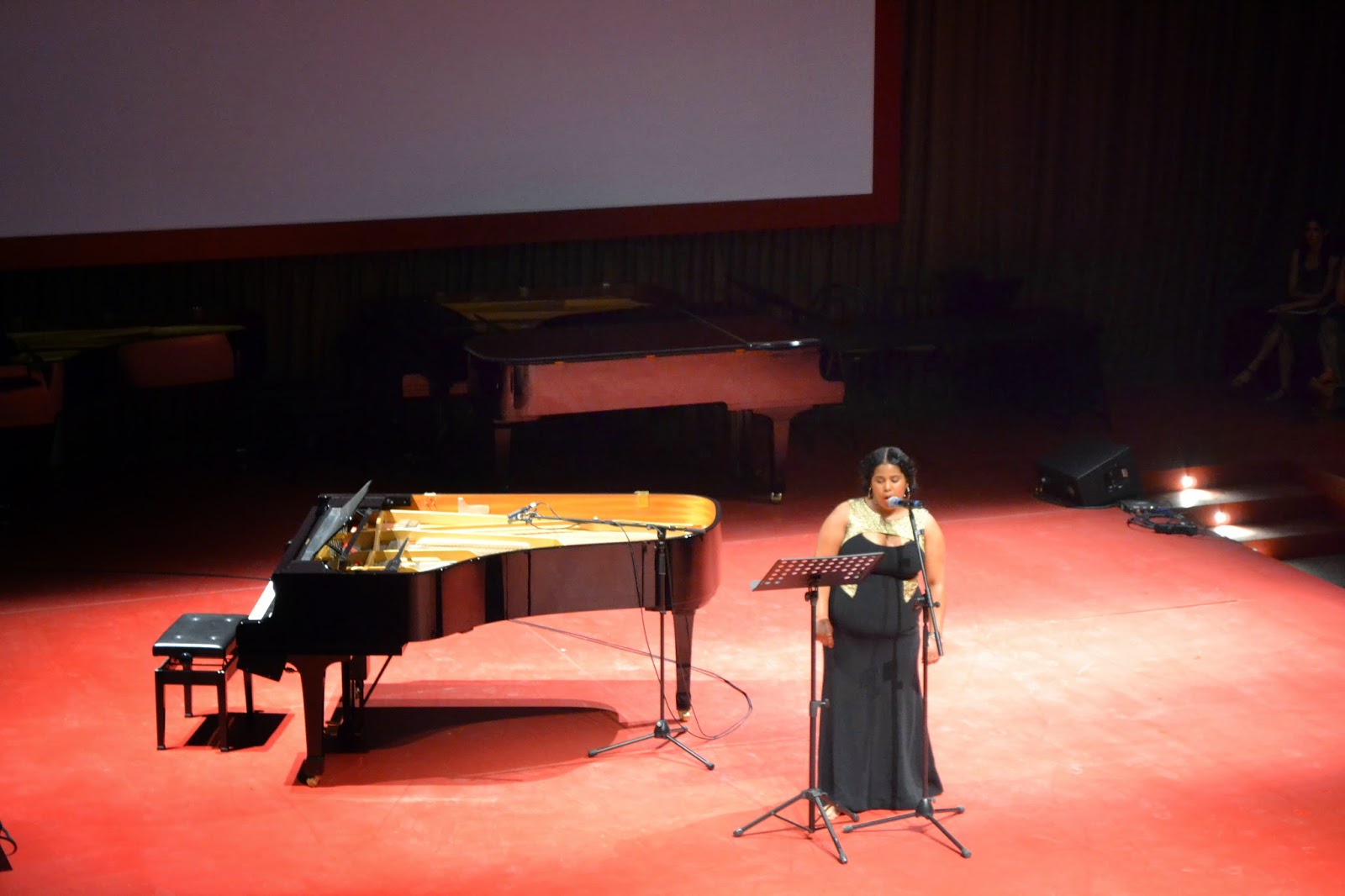
The exhibition occupied the whole of the City of Venice and its environs. Each of the pavilions erected by the countries of the world, encompassed their own themes and central artist conceptions. The Nordic Pavilion, for example, featured the work of Camille Norment, a Black American artist who is a native of Silver Spring, Maryland, who now lives and works in Oslo, Norway. Her project, 'Rapture,' encompasses a site-specific sculptural and sonic installation in the Nordic Pavilion, couple with live performances by the artist and her trio with David Topp, a composer with the London College of Communication in an abstract 'performance lecture' encompassing the spoken word, voice and sound vibration along with Swedish soprano and voice-artist/improviser Sofia Jernberg. The Camille Norment Trio involves both traditional and historical instruments, including electric guitar, the Hardanger fiddle and the glass armonica, a legendary 18th century instrument that creates ethereal music using glass and water. The glass armonica was first celebrated for curing people with its entrancing music. Invented by Benjamin Franklin, and once played by Mozart and Masrie Antoinette, the glass armonica was later banned because it was though to arouse sexual excitement in women. It is used with new music composed by the artist to explore the relationship between the human body and sound. Norman has created a multi-sensory space which reflects the history of sound, contemporary concepts of harmony and dissonance and the water, glass and light that is unique to Venice. Combing sound, sculpture and architectural stimuli, Normant's installation is one of the most striking of all of the international pavilions.
Situated between the pavilions of the United States and Denmark, the Nordic Pavilion is centrally situated on one of the main arteries of the Giardini, la Biennale's central locale. 'Rapture' by Camille Norment is especially notable because this year, Norway is solely responsible for the Nordic Pavilion at the Venice Biennale for the first time in history. So significant was this event, that Herr Royal Highness Crown Princess Mette-Marit of Norway presided over the official inauguration, with an address by Curator of the Nordic Pavilion, Kayla Garcia-Anton, Director of OCA and a performance by the Camille Norment Trio followed by a news conference and reception.
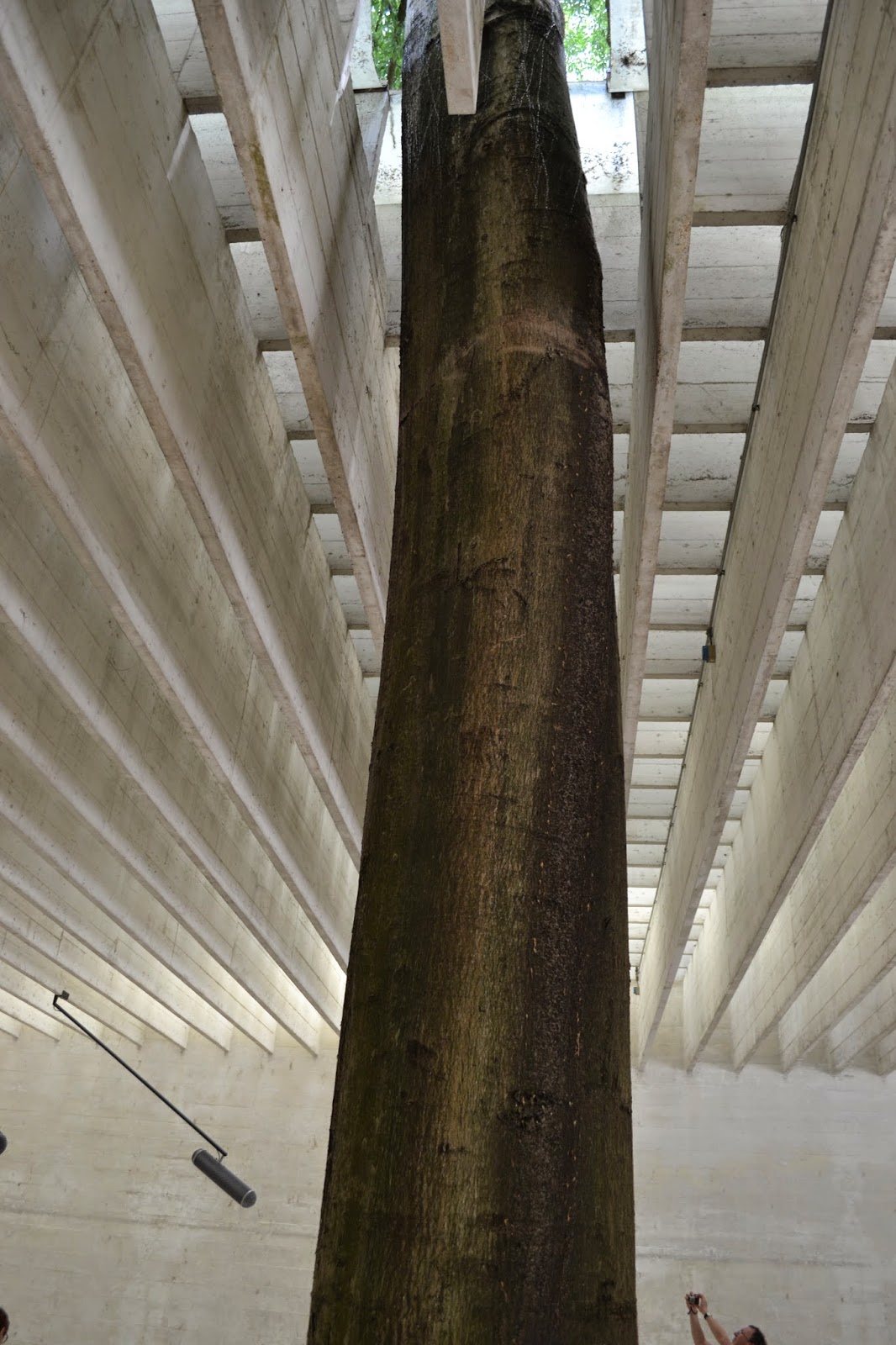
When entering the Nordic Pavilion, one is at first awe-struck by the cultural installation Shattered Glass by Camille Norment, which features huge World Trade Center-sized window frames, surrounded by huge shards of broken glass, that are actually carefully crafted pieces that were individually crafted by architectural designers. Inside, viewers are bathed in natural light and surrounded by a sonic chorus of recorded voices and sounds from the ancient armonica. Central to the pavilion are three large trees thrusting through the roof of the pavilion to the sky. The pavilion was deliberately built around the trees to heighten the relationship of the space and its occupants to its natural surroundings in the Giardini.
In talking about her installation 'Rapture,' Camille Norment commented: "Sound, by its nature, permeates borders-even invisible ones. Throughout history, fear has been associated with the paradoxical effects music mason the body and mind and its power as a reward-giving de-centraliser of control. Music is still seen by many in the world as an experience that should be controlled-especially in relation to the female body-and yet it is also increasingly used as a tool for control, especially under the justifications of war."
In addition to Camille Norment's commission for the primary installation at the Nordic Pavilion, the 56th Venice International Art Exposition is notable for its involvement of African, African American and artists of color from around the world.
Besides the appointment of Okwui Enwezor as Curator, award-winning Ghanaian-born, British architect David Adjaye is the designer of the ARENA, a large-scale venue designed to bring together practitioners across the fields of visual arts, cinema, music, theatre, dance and performance art. "The entire project took six months of planning and nearly two years of execution and building,"Adjaye confided in an interview. The ARENA is being introduced as something new to La Biennale, in that this is an active space dedicated to continuous programming across all disciplines. It's especially unique because it is located within the Central Pavilion of the Giardini, making it the virtual heartbeat of the entire Biennale" Ghanaian born British filmmaker and filmmaker Isaac Julien has curated and directed DAS KAPITAL, in which trained actors read a dramatic text from the writings and philosophy of Karl Marx for the entire duration of La Biennale from now through November 22, 2015. Accompanying the live reading from Marx;s seminal and still-controversial book, a classic of social and economic analysis, the readings will be accompanied by a continuous sequence of other oral performances, involving the spoken word, librettos, lyrics and scripts from noted artists around the world.
Award-winning jazz artist and composer Jason Moran of New York City has curated a series of live performances at the ARENA entitled STAGED, which maps and investigates the tempos of songs sung in prisons, fields and houses. A sampling of songs by inmates working in Angola Louisiana State Penitentiary, women clapping hands to the rhythm of a plow while toiling in the fields and work songs sung on the docks or in urban factories, provides the tapestry of spoken and verbal sound that is the fabric of the ARENA.
Camille Norment of Oslo in the Norway Pavilion with her armonica and (Below) "Shattered Glass"
Camille Norment's armonica
The installation at the Russian Pavilion
"Shattered Glass" in the Nordic Pavilion
A tree grows through the roof of the Nordic Pavilion
Jason Moran's "Work Songs" in the ARENA
Early morning in St. Mark'sSquare
ARENA designer David Adjaye
Scenes from the work fields at Angolo Prison
Sunset over the Grand Canal
Above and Below: Scenes from the film installation by Acadamy Award winning director Steve McQueen of "Twelve Years A Slave"
Wednesday, May 27, 2015
Monday, May 25, 2015
Sunday, May 17, 2015
South African Wines Seek New Inroads in the U.S.
National Restaurant Association Show a forum for new South African Wines
The South African Consulate in Chicago was the setting for a premiere presentation of the Wines of South Africa, a unique collection of food-friendly and affordable wines that reflect the terroir and taste of this unique, emerging nation.
"South Africa is a new country country politically, but it is actually one of the oldest commercial wine producing regions in the world, with a history that dates back more than 600 years." said Jim Clarke, Marketing Director for Wines of South Africa." In the 1600s, the members of the French court and the intelligentia extolled the virtues of South African wine, even thought that had some tremendous wines of their own production."
The wines, poured personally, in many instances, by the winemakers themselves, not only showed their mastery of such international grapes as Cabernet Sauvignon, Sauvignon Blanc and Chardonnay, but indigenous grapes, such as Pinotage. considered the national flagship grape of South Africa.
The majority of wines presented are currently available in both the Chicago and New York markets and are beginning to fan out in distribution around the country.
"When we first started presenting South African wines to the wine-drinking public, we were initially told, 'these wines are fantastic, why haven't we heard about them!' We are now creating the answer to that initial response by starting an aggressive marketing and sales campaign that will put South African wines on the shelves and in restaurant cellars in every major market in the United States.
Among the standouts at the tasting, which also featured bites that reflected the local cuisine, were those from Seven Sisters Wines, develop by the seven sisters of the Brutus family from the tiny fishing village of Paternoster on the West Coast of South Africa. Evicted from their tranquil home at an early age, due to unfavorable circumstances, they vowed to return, reuniting to buy back the land twenty years later, with the goal of creating fine wines. The warm summers with their low humidity, the copious winter rainfall and the complex soil type dominated by the celebrated Malmesbury Shale and patches of Granite and Table Mountain Sandstone resulted in wines of complex, bright, fruit character and rich depth of flavor with rich floral aromas.
Each of the wines is named for a sister. For example, Odealia is a naturally sweet white wine made from 100% Bukettraube grapes, a local varietal. It's a terrific accompaniment with a favorite dessert of as an aperitif or after dinner drink. Vivian is an elegant Sauvignon Blanc with tropical flavors and an underlying note of green pepper and sage. The wine pairs nicely with seafood, which is found in abundance off the coast of South Africa.
Ernst Gouws wines of Stellenbosch are a reflection of the family's heritage, dating back to 1694, when the first French Huguenots came to South Africa and the first Gouts (then called d'Gauche') began producing wines. In 1975, Ernst Gouts traveled to Europe to begin his tutelage under both French and German winemaster. Marrying his childhood sweetheart, Gwenda, he returned to South Africa and founded the winery that is he now runs with his sons Ernst Jr. and Ezanne Gouts-Du Toit and daughter Inke Gouts-Sandri, who are all pursued an education in winemaking in order to follow in their father's footsteps. The result is wines of a highly sophisticated character that reflect the finest wines of Bordeaux, Burgundy or the Rheingau. The wines have been recognized in this country by both Robert Parker and the Wine Spectator and reflect the winemaster oeuvre and dedication to the principals and methodologies of traditional European winemaking. Yet, the wines reflect the complex terroir and flavor that is unique to South Africa.
Ernst Gouws Chenin Blanc is a wine that is perfect for summer. Scents of baked apples, hints of kiwi fruit and the freshness of a sliced grapefruit or ripe honeydew melon, the wine is great with a light salad, grilled Bronzini white fish or lighly grilled shrimp or scallops. The Merlot, with its potpourri of black pepper, sun-dried tomatoes and hints of paprika and a toasty nose that belied its aging in new French limousine oak barrels was by far the most intriguing offering of the tasting. This is a marvelous expression of one of the noblest of all international grapes. Perfect with grilled meats, pizza or pasta, the wine would make a welcome guest at any backyard barbecue or garden party. With Ernst Gouts wines priced at $16-$24, they fit nicely into the weekend fun budget.
Women in Wine CEO Beverly Farmer presented an enticing array of wines from the Stellenbosch region created by a collective of women wine makers. "The tradition of women in winemaking actually goes back for several decades, with many women first coming into the industry creating wines side-by-side with their husbands, then many of them became widowed and continued on with the business of producing wines. That formed the basis for a tradition of younger women actively pursuing careers in wine and creating some truly outstanding wines that we're now brining to market."
Vernon Henn of Thandi wines was on hand to introduce his delicate sparkling wines that are perfect for drinking on the patio. His wines provided a perfect in to an evening that was enhanced by the strains of South African music playing over the interoffice sound system as the party enlivened with the sound of glasses clinking as guests savored the taste of South Africa.
Vivian Kleynhans Managing Director Seven Sisters wines
Ernst Gouws, Founder, Ernst Gouws and Co.
Karabo Letlsaka, Consul Political, South African Consulate General
Sir Charles Stanfield , Esther Fillmore and Ron Lundquist, South African Consulate
Nadine Smith-Clarke-Export Development Manager, South Africa, WESGRO-Western Cape and Cape Town tourism, trade and investment
Below: Vernon Henn, Thandi Wines
Women in Wine's Beverly Farmer
The South African Consulate in Chicago was the setting for a premiere presentation of the Wines of South Africa, a unique collection of food-friendly and affordable wines that reflect the terroir and taste of this unique, emerging nation.
"South Africa is a new country country politically, but it is actually one of the oldest commercial wine producing regions in the world, with a history that dates back more than 600 years." said Jim Clarke, Marketing Director for Wines of South Africa." In the 1600s, the members of the French court and the intelligentia extolled the virtues of South African wine, even thought that had some tremendous wines of their own production."
The wines, poured personally, in many instances, by the winemakers themselves, not only showed their mastery of such international grapes as Cabernet Sauvignon, Sauvignon Blanc and Chardonnay, but indigenous grapes, such as Pinotage. considered the national flagship grape of South Africa.
The majority of wines presented are currently available in both the Chicago and New York markets and are beginning to fan out in distribution around the country.
"When we first started presenting South African wines to the wine-drinking public, we were initially told, 'these wines are fantastic, why haven't we heard about them!' We are now creating the answer to that initial response by starting an aggressive marketing and sales campaign that will put South African wines on the shelves and in restaurant cellars in every major market in the United States.
Among the standouts at the tasting, which also featured bites that reflected the local cuisine, were those from Seven Sisters Wines, develop by the seven sisters of the Brutus family from the tiny fishing village of Paternoster on the West Coast of South Africa. Evicted from their tranquil home at an early age, due to unfavorable circumstances, they vowed to return, reuniting to buy back the land twenty years later, with the goal of creating fine wines. The warm summers with their low humidity, the copious winter rainfall and the complex soil type dominated by the celebrated Malmesbury Shale and patches of Granite and Table Mountain Sandstone resulted in wines of complex, bright, fruit character and rich depth of flavor with rich floral aromas.
Each of the wines is named for a sister. For example, Odealia is a naturally sweet white wine made from 100% Bukettraube grapes, a local varietal. It's a terrific accompaniment with a favorite dessert of as an aperitif or after dinner drink. Vivian is an elegant Sauvignon Blanc with tropical flavors and an underlying note of green pepper and sage. The wine pairs nicely with seafood, which is found in abundance off the coast of South Africa.
Ernst Gouws wines of Stellenbosch are a reflection of the family's heritage, dating back to 1694, when the first French Huguenots came to South Africa and the first Gouts (then called d'Gauche') began producing wines. In 1975, Ernst Gouts traveled to Europe to begin his tutelage under both French and German winemaster. Marrying his childhood sweetheart, Gwenda, he returned to South Africa and founded the winery that is he now runs with his sons Ernst Jr. and Ezanne Gouts-Du Toit and daughter Inke Gouts-Sandri, who are all pursued an education in winemaking in order to follow in their father's footsteps. The result is wines of a highly sophisticated character that reflect the finest wines of Bordeaux, Burgundy or the Rheingau. The wines have been recognized in this country by both Robert Parker and the Wine Spectator and reflect the winemaster oeuvre and dedication to the principals and methodologies of traditional European winemaking. Yet, the wines reflect the complex terroir and flavor that is unique to South Africa.
Ernst Gouws Chenin Blanc is a wine that is perfect for summer. Scents of baked apples, hints of kiwi fruit and the freshness of a sliced grapefruit or ripe honeydew melon, the wine is great with a light salad, grilled Bronzini white fish or lighly grilled shrimp or scallops. The Merlot, with its potpourri of black pepper, sun-dried tomatoes and hints of paprika and a toasty nose that belied its aging in new French limousine oak barrels was by far the most intriguing offering of the tasting. This is a marvelous expression of one of the noblest of all international grapes. Perfect with grilled meats, pizza or pasta, the wine would make a welcome guest at any backyard barbecue or garden party. With Ernst Gouts wines priced at $16-$24, they fit nicely into the weekend fun budget.
Women in Wine CEO Beverly Farmer presented an enticing array of wines from the Stellenbosch region created by a collective of women wine makers. "The tradition of women in winemaking actually goes back for several decades, with many women first coming into the industry creating wines side-by-side with their husbands, then many of them became widowed and continued on with the business of producing wines. That formed the basis for a tradition of younger women actively pursuing careers in wine and creating some truly outstanding wines that we're now brining to market."
Vernon Henn of Thandi wines was on hand to introduce his delicate sparkling wines that are perfect for drinking on the patio. His wines provided a perfect in to an evening that was enhanced by the strains of South African music playing over the interoffice sound system as the party enlivened with the sound of glasses clinking as guests savored the taste of South Africa.
Vivian Kleynhans Managing Director Seven Sisters wines
Ernst Gouws, Founder, Ernst Gouws and Co.
Karabo Letlsaka, Consul Political, South African Consulate General
Sir Charles Stanfield , Esther Fillmore and Ron Lundquist, South African Consulate
Nadine Smith-Clarke-Export Development Manager, South Africa, WESGRO-Western Cape and Cape Town tourism, trade and investment
Below: Vernon Henn, Thandi Wines
Women in Wine's Beverly Farmer
Sunday, May 3, 2015
Wednesday, April 29, 2015
MET LIVE HD CAVALLERIA RUSTICANA/PAGLIACCI DOUBLE BILL IN ENCORE PRESENTATION WEDNESDAY, APRIL 29 AT 6:30PM
Reviewed by Dwight Casimere
Photos courtesy Metropolitan Opera
MET LIVE HD ENCORE PRESENTATION Wednesday April 29, 6:30pm local time
Check theatre local theatre listings for location or visit metopera.org or fathomevents.com
NEW YORK---Opera lovers are in for a real treat when the Metropolitan Opera presents and Encore Presentation of its Live in HD transmission of Pietro Mascagni's Cavalleria Rusticana and Rugerro Leoncavallo's Pagliacci. The new production from Sir David McVicar places the action in the same Sicilian Village, yet the operas take place in two distinct time periods; Cavalleria in the rustic village square atmosphere of 1900 Sicily'. when the region was virtually a Church-State to the free-wheeling post World War II years, where the setting for Pagliacci is a truck stop where a hapless vaudeville troop has set up shop.
The fact that Met super-sopranos Eva-Maria Westbroek (Cav) and Patricia Racette (Pag) sing the roles of the unlucky heroines and heroic tenor Marcelo Alvarez takes on the dual roles of Turridu in Cav and the tragic clown Canio in Pag, makes this a performance that is not to be missed.
Fabio Luisi embellishes the rich music with just the right amount of flourish and drama and Rae Smith, who did War Horse at the Beaumont a few years ago, provides convertible sets that effectively evoke the two time periods. Costumes by Moritz Junge, Lighting Design by Paule Constable and superb Choreography from Andrew George and the work of Vaudeville Consultant Emil Wolk in Pagliacci, make this an all-encompassing experience. Live HD Director, the award-winning television veteran Gary Halvorson (Two and a Half Men), give this Live in HD presentation a depth and polish that is noteworthy. Met superstar Susan Graham provides insightful questions for the backstage interviews with all of the principals, which further elucidates the experience.
Cavalleria Rusticana and Pagliacci run through May 8 at the Metropolitan Opera. The April 25 matinee will be re-broadcast live in HD tonight at 6:30pm in theatres everywhere. Visit metopera.org or fathomevents.com.
Photos courtesy Metropolitan Opera
MET LIVE HD ENCORE PRESENTATION Wednesday April 29, 6:30pm local time
Check theatre local theatre listings for location or visit metopera.org or fathomevents.com
NEW YORK---Opera lovers are in for a real treat when the Metropolitan Opera presents and Encore Presentation of its Live in HD transmission of Pietro Mascagni's Cavalleria Rusticana and Rugerro Leoncavallo's Pagliacci. The new production from Sir David McVicar places the action in the same Sicilian Village, yet the operas take place in two distinct time periods; Cavalleria in the rustic village square atmosphere of 1900 Sicily'. when the region was virtually a Church-State to the free-wheeling post World War II years, where the setting for Pagliacci is a truck stop where a hapless vaudeville troop has set up shop.
The fact that Met super-sopranos Eva-Maria Westbroek (Cav) and Patricia Racette (Pag) sing the roles of the unlucky heroines and heroic tenor Marcelo Alvarez takes on the dual roles of Turridu in Cav and the tragic clown Canio in Pag, makes this a performance that is not to be missed.
Fabio Luisi embellishes the rich music with just the right amount of flourish and drama and Rae Smith, who did War Horse at the Beaumont a few years ago, provides convertible sets that effectively evoke the two time periods. Costumes by Moritz Junge, Lighting Design by Paule Constable and superb Choreography from Andrew George and the work of Vaudeville Consultant Emil Wolk in Pagliacci, make this an all-encompassing experience. Live HD Director, the award-winning television veteran Gary Halvorson (Two and a Half Men), give this Live in HD presentation a depth and polish that is noteworthy. Met superstar Susan Graham provides insightful questions for the backstage interviews with all of the principals, which further elucidates the experience.
Cavalleria Rusticana and Pagliacci run through May 8 at the Metropolitan Opera. The April 25 matinee will be re-broadcast live in HD tonight at 6:30pm in theatres everywhere. Visit metopera.org or fathomevents.com.
Monday, April 27, 2015
TRIBECA FILM FESTIVAL--"THE DIPLOMAT" HBO DOCUMENTARY HAS WORLD PREMIERE
Reviewed by Dwight Casimere April 23
NEW YORK--"The Diplomat, " an HBO documentary that will air in the fall in commemoration of the 20th anniversary of the Dayton Peace Accords which ended the war in Bosnia, had its world premiere at the 2015 Tribeca Film Festival. The film, directed by Holbrooke's son, David, presents a larger-than-life portrait of the career diplomat, whose brash style and uncompromising manner often set him at odds with the White House, to which he served as a diplomatic troubleshooter for fifty years. His mission and his legacy are as relevant today as they were during the crisis diffusions he brokered during his lifetime, as evidenced in a front page New York Times story that was published on the same day as the film's Tribeca premiere.
The article detailed revelations from his personal diary that had remained secret until now. The diary revealed his personal dissatisfaction with the Obama administration and its refusal to pursue a tactical solution to U.S. entanglement in Afghanistan. In his personal view, he saw the president and his advisors as being driven by domestic political considerations instead of the larger international implications at hand. President Obama, according to Holbrooke's secret diary, turned a cold shoulder to his advice, instead relying on that of White House insiders and the military.
Tribeca gave the film all of the world-class pomp and circumstance it deserved. A Red Carpet reception preceded the screening with a discussion and Q and A after the movie, hosted by Yahoo International Editor Katie Couric.
The film in many ways, was an effort by the director to come to terms with the difficulty of being raised in the shadow of a man who was larger than life in the public eye, but never more than a distant, shadowy figure in his own life. Like so many children of the famous, the image of his father is far different than the public's perception. At one point, we see the director break down in tears as one of his interview subjects reveal to him his father's dying words. It is a moment that rivets the film.
Richard Holbrooke was a larger-than-life figure and a maverick. He fit none of the normal molds hat shaped others in the diplomatic corp. He spoke his mind and was not above using threats to achieve his goals. David Holbrooke even said during his post-screening interview with Couric, that he considered called the film "The Undiplomat." In spite of his confrontational manner, the elder Holbrooke garnered the respect of many of the dictators he came up against. In negotiations to end the war in Bosnia, his tough tactics to bring warring parties to the bargaining table earned him the begrudging respect of the hard-nosed dictators on both sides, even the privilege of calling one of them by his nickname.
The documentary spans the nation's troubled wartime landscape of the past half century; Vietnam, Bosnia, Kosovo and Afghanistan. It also goes behind the scenes to reveal the often bare-knuckled wrangling that went on in the Oval Office and in the private meeting rooms that line the corridors of the State Department and Capitol Hill.
Revealing interviews from Hillary Clinton, Madeline Albright, Bill Clinton, Henry Kissinger, Al Gore, Diane Sawyer, UN Ambassador Samantha Power, General David Patraeus, General Wesley Clark, journalist Roger Cohen and others, further unwrap the onion-skin layers of Holbrooke's muti-faceted mercurial personality.
Holbrooke's single-mindedness and confrontational style served him well in the political arena of the last century, but with the arrival of President Obama and his cool-hand-Luke personality and poker face, Holbrooke's hubris was an unwelcome commodity. His frequent attempts to gain a private audience with the President regarding Afghanistan were often rebuffed. The one meeting that did occur resulted in a minor affront to Holbrooke's ego, when the President insisted on calling him "Dick." "Call me Richard," Holbrooke offered. "My wife prefers it that way. The obvious tongue in cheek reference to their shared experience with strong-willed wives completely escaped the humorless Obama and only served to increase the icy impasse between them.
Ever the dedicated, career diploimat, Holbrooke died, in cowboy parlance, with his boots on. A last ditch effort to meet with then Secretary of State Hilary Clinton in yet another vain attempt to gain the ear of the President on Afghanistan was truncated by sudden illness. Rushed to the hospital in the throes of cardiac arrest, he later died from complications of surgery to repair an exploded aortic artery at the age of 69.
Richard Holbrooke's life as chronicled in the documentary "The Diplomat" is more than an effort of a son to capture the legacy of his father. It is a detailed chronicle of the inner workings of a foreign policy that continues to place the leadership of the free world in the cross hairs of demagogues.
Director David Holbrooke at Tribeca Film Festival with Katie Couric
HBO documentary producer Stacey Reiss and his subject
Below: Richard Holbrooke in action in The Diplomat
NEW YORK--"The Diplomat, " an HBO documentary that will air in the fall in commemoration of the 20th anniversary of the Dayton Peace Accords which ended the war in Bosnia, had its world premiere at the 2015 Tribeca Film Festival. The film, directed by Holbrooke's son, David, presents a larger-than-life portrait of the career diplomat, whose brash style and uncompromising manner often set him at odds with the White House, to which he served as a diplomatic troubleshooter for fifty years. His mission and his legacy are as relevant today as they were during the crisis diffusions he brokered during his lifetime, as evidenced in a front page New York Times story that was published on the same day as the film's Tribeca premiere.
The article detailed revelations from his personal diary that had remained secret until now. The diary revealed his personal dissatisfaction with the Obama administration and its refusal to pursue a tactical solution to U.S. entanglement in Afghanistan. In his personal view, he saw the president and his advisors as being driven by domestic political considerations instead of the larger international implications at hand. President Obama, according to Holbrooke's secret diary, turned a cold shoulder to his advice, instead relying on that of White House insiders and the military.
Tribeca gave the film all of the world-class pomp and circumstance it deserved. A Red Carpet reception preceded the screening with a discussion and Q and A after the movie, hosted by Yahoo International Editor Katie Couric.
The film in many ways, was an effort by the director to come to terms with the difficulty of being raised in the shadow of a man who was larger than life in the public eye, but never more than a distant, shadowy figure in his own life. Like so many children of the famous, the image of his father is far different than the public's perception. At one point, we see the director break down in tears as one of his interview subjects reveal to him his father's dying words. It is a moment that rivets the film.
Richard Holbrooke was a larger-than-life figure and a maverick. He fit none of the normal molds hat shaped others in the diplomatic corp. He spoke his mind and was not above using threats to achieve his goals. David Holbrooke even said during his post-screening interview with Couric, that he considered called the film "The Undiplomat." In spite of his confrontational manner, the elder Holbrooke garnered the respect of many of the dictators he came up against. In negotiations to end the war in Bosnia, his tough tactics to bring warring parties to the bargaining table earned him the begrudging respect of the hard-nosed dictators on both sides, even the privilege of calling one of them by his nickname.
The documentary spans the nation's troubled wartime landscape of the past half century; Vietnam, Bosnia, Kosovo and Afghanistan. It also goes behind the scenes to reveal the often bare-knuckled wrangling that went on in the Oval Office and in the private meeting rooms that line the corridors of the State Department and Capitol Hill.
Revealing interviews from Hillary Clinton, Madeline Albright, Bill Clinton, Henry Kissinger, Al Gore, Diane Sawyer, UN Ambassador Samantha Power, General David Patraeus, General Wesley Clark, journalist Roger Cohen and others, further unwrap the onion-skin layers of Holbrooke's muti-faceted mercurial personality.
Holbrooke's single-mindedness and confrontational style served him well in the political arena of the last century, but with the arrival of President Obama and his cool-hand-Luke personality and poker face, Holbrooke's hubris was an unwelcome commodity. His frequent attempts to gain a private audience with the President regarding Afghanistan were often rebuffed. The one meeting that did occur resulted in a minor affront to Holbrooke's ego, when the President insisted on calling him "Dick." "Call me Richard," Holbrooke offered. "My wife prefers it that way. The obvious tongue in cheek reference to their shared experience with strong-willed wives completely escaped the humorless Obama and only served to increase the icy impasse between them.
Ever the dedicated, career diploimat, Holbrooke died, in cowboy parlance, with his boots on. A last ditch effort to meet with then Secretary of State Hilary Clinton in yet another vain attempt to gain the ear of the President on Afghanistan was truncated by sudden illness. Rushed to the hospital in the throes of cardiac arrest, he later died from complications of surgery to repair an exploded aortic artery at the age of 69.
Richard Holbrooke's life as chronicled in the documentary "The Diplomat" is more than an effort of a son to capture the legacy of his father. It is a detailed chronicle of the inner workings of a foreign policy that continues to place the leadership of the free world in the cross hairs of demagogues.
Director David Holbrooke at Tribeca Film Festival with Katie Couric
HBO documentary producer Stacey Reiss and his subject
Below: Richard Holbrooke in action in The Diplomat
Subscribe to:
Posts (Atom)


.jpg)
.jpg)