Friday, October 16, 2015

Friday, October 9, 2015
51ST CHICAGO INTERNATIONAL FILM FESTIVAL OCTOBER 15-29
THE 51ST
CHICAGO INTERNATIONAL FILM FESTIVAL OCTOBER 15-29

The 51st
Chicago International Film Festival presented by Cinema Chicago begins
Thursday, October 15 and runs through Thursday, October 29th. Festival passes and individual tickets
are available online at chicagofilmfestival.com or
ticketmaster.com/chicagofilmfestival, at the Festival Hotline, 312-332-FILM
(3456) or at the Festival box offices, AMC River East 21 , 322 East Illinois
St., or the Festival Office, 30 East Adams, Suite 800 in Chicago.
Featuring
130 films from over 50 countries, the festival is highlighted by 6 World
Premieres, 10 North American Premieres, 27 U.S. Premieres and over a hundred
Chicago Premieres.
This is
the longest-running international competitive film festival in North America
and, as in festival’s past, there are more than a few landmark events planned
as well as some surprises.
Opening
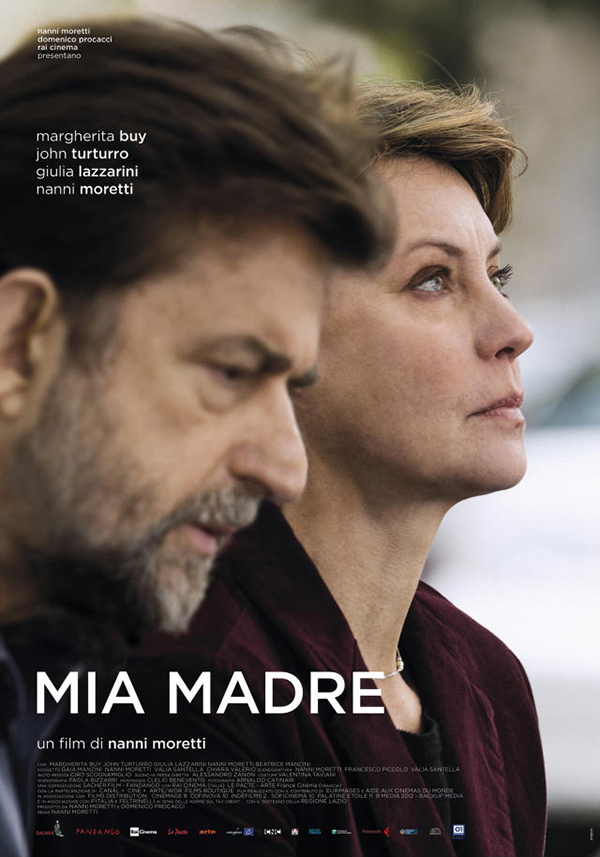
Night, Thursday, October 15th from 5:30pm-10:00pm is the screening
of the film MIA MADRE from master film director Nanni Moretti, at the
Auditorium Theatre, 50 East Congress Parkway, Chicago. John Turturro provides
the comic relief as the self important American actor in this film about the
violent clash of art with reality. The film is a personal tour de force that
details the struggles of a harried director who tries to complete her new movie
while caring for her beloved mother, who lies dying in the hospital. The film
makes a powerful statement about
the personal cost of artistic integrity.


Among the films receiving its World Premiere is the film BREAKFAST AT INA’S, from director Mercedes Kane. The film lovingly focuses on the “Breakfast Queen,” restaurant proprietor and chef Ina Pinkney, owner of a Chicago institution, Ina’s, which closed after 33 years in business. The film follows the restaurant’s final month. Besides paying homage to a beloved Chicago eatery, it tells the story of one woman’s struggle to achieve her dream against all odds.
The 51st
Chicago International Film Festival runs through October 29. For tickets and
show times, visit chicagofilmfestival.com.
Thursday, October 8, 2015
JASON AND SHIRLEY: A PORTRAIT OF A GREAT PRETENDER ON THE LGBT FRONTIER
JASON AND
SHIRLEY LAYS BARE THE TORTURED SOUL OF AN EMOTIONALLY HAMPERED GENIUS
Reviewed by
Dwight Casimere

Theatrical
Premiere: The Museum of Modern Art, October 19, 2015
Jason and Shirley is a cinematic recreation by NYC-based
filmmaker Stephen Winter (Chocolate Babies). Based on Oscar-winning avant garde filmmaker and director
Shirley Clarke’s groundbreaking documentary, Portrait of Jason, released in
1967 and premiered at the New York Film Festival that same year, winter’s
version shows all of the stuff that may or may not have happened behind the
scenes while the camera was rolling. It’s an intriguing concept that takes the
old ‘fly on the wall’ concept to new heights.
Jason
Holliday, the central character, is black and gay at a time when the legitimacy
of both hung in the national balance.
At times hilarious, and alternately desperate and heartbreaking, the
film is a brilliant reincarnation.
Veteran downtown New York actor and filmmaker Jack Waters is superbly
cast as Jason and renowned writer and activist Sarah Schulman is spot-on as
director and sometime adversary Shirley
Clarke (we later learn in the film that her real name is Sarah Brimberg. That
her father was a manufacturing scion, and that she grew up on Park Avenue in
the lap of luxury).
Shirley Clarke was an anomaly of her time and was on the
short list of groundbreaking female directors working in the 1960s ; Ida
Lupino, an actress (often with husband Howard Duff) and pioneer of the ‘film
noir’ genre, Mai Zetterling, another actress-turned-director, Sara Aldredge, an
innovator in experimental film, and Carolee Schneemann, who pioneered films
dealing with the issues of sexuality, power and gender. Clarke won
an Academy Award in 1963 for Robert Frost: A Lover's Quarrel With the World,
and was co-nominee for Skyscraper (1960). Clarke made Skyscraper
with two other documentary filmmakers. In 1964, The Cool World
became the first independently-made film to be screened at the Venice
International Film Festival.

The genesis of Jason and Shirley is
almost worthy of its own atmospheric film, evoking the free-wheeling era of the
1960s. The original documentary was filmed on the evening of Saturday, December 3, 1966. Director
Shirley Clarke and her crew, consisting of her unwilling son, Nico, who needed
the practical experience for film school ( she filmed Jason for twelve straight
hours. The shoot started at 9pm. To say that it was exhaustive is an
understatement). I saw the restoration of the original at the IFC film center
in the Village last spring. In it, the only person you see on-camera is Jason
Holliday (who we learn is actually named Aaron Payne (1924-1998) of Trenton,
New Jersey). This was the ‘60s. Yet, in spite of The Beatles, Martin Luther
King Jr. and the Civil Rights Movement, free love, drugs and the Hippie
Culture, it was still a time when it was illegal to be gay in the US.
In the original film, we hear the
director and others commenting off camera, but we never see them. Here,
director Winter fills in all the blanks and fleshes out the imagined drama
behind the scenes, which is only hinted at in the original film.

The film is set primarily in the
claustrophobic world of Clarke’s penthouse apartment in the Hotel Chelsea.
Before you get too carried away with an image of unbridled lavishness and
wealth, consider that the ‘penthouse’ has beaded curtain room dividers between
the living room and the kitchen (a totally hippy-ish glamour touch) and, by her
own admission, wrinkled bed sheets on a pull-out bed covered with Madras-print
pillows in the living room. The nicest thing in whole apartment is the faux
fireplace mantle with its fake lilacs in a vase and an African mask on the
wall.
A director friend who loaned her
the camera equipment, who turns out to be a virulent racist and homophobe, first
suggests throwing it all out, but once he learns the drill, feels the tacky
backdrop may be just right. Too bad he couldn’t stick around, he might have
made an excellent source of running conflict throughout the film, but the
tension between Jack and Shirley proves to be enough.
Early on, the director has to
practically beg her son and boom mike operator, Nico, to straighten up the
place (played with appropriate reluctant uneasiness by Eamon Fahey, who is, at
times, the queasy object of Jason’s wandering gay eye “Ohh! You cookin’ up some
juicy chicken meat up in here!” he declares upon entering Clarke’s apartment
and spying her young son).
Bryan Webster is absolutely
delightful as the dope dealer friend Candy Man, whose long-awaited arrival
propels the film to its denouement. He does his best to look like a barefoot
Ray Charles, delivering the much-demanded dope that Jason says he needs in
order to relax and ‘be real’ on-camera.
In the film, Jason, in his
exaggerated manner of speaking through his alcohol and drug fueled haze, spins
extraordinary tales about his a career as a quasi-drag nightclub entertainer, which
appear to be more imaginary (especially when he’s high) than real. In real life, there’s only one known
performance of his cabaret act in a one-night-only performance in the theatre
district.
His confrontations with his father;
growing up in Trenton is at the center of his internal conflicts. He describes
in creepy detail one encounter with his father as a toddler that may or may not
reveal the origins of his sexual preferences. He is similarly vague about the
sexual encounters that occurred later in life when he was arrested and
imprisoned at Rikers Island and was, presumably, raped and driven to the point
of attempted suicide.
The one thing he is perfectly clear
about is that he is a hustler, who is not above sex play-for-pay and who
willingly lowers himself to work as a sex slave/servant to wealthy white women
who are thirsting for companionship.
“We’re all ‘niggers’ Jason declares
more than once, taunting director Clarke because of her Jewish heritage and
wealth. In his derision, he also makes his point about the role-playing and
masquerading that everyone does in one way or another to keep the grist in
their mill.
Along the way, he reveals some
harsh truths by way of raw, entirely classless humor. “What do you call a
nigger whose been shot 14 times?! A botched suicide attempt!” presciently referencing the present
day ‘black lives matter’ protests over the unlawful killings of young black
men.
Another ‘Bon Mot;’ ‘Niggers are
constantly in pain. They won’t open an aspirin bottle because they refuse to
once again pick cotton,” referring to the cotton ball enclosures in aspirin
bottles of the time. In it’s own way, the comment makes a sort of lame social
statement.
Jason repeatedly avoids director
Shirley Clarke’s probing questions. “Tell me about your old man,” she asks
repeatedly, asking him to address his obviously rocky relationship with his
father. He finally remits, after his good friend and dope dealer Carl Lee, a fellow
would-be actor caught up in his own snake-pit of sexual identity and drug
addiction belatedly arrives on the scene.
When he finally arrives on the
scene, Clarke enlists his help in breaking Jason down to finally reveal his
true self, sans the posturing and the bullshit. Even when Jason finally
crumbles in tears at Lee’s incessant prodding, we still wonder if he’s is
leveling with us, or just embarking on another of his charades.
Sadly, Jason Holliday died a pauper in 1998 at the age
of 74. He was cremated and there was no funeral service or memorial and no
relatives of record. His burial place is unknown.
Jason and Shirley is, as was the original, an important film
in the LGBT film lexicon. The brilliant acting and meticulous recreation of
historic and psychological time and place alone make it worthy of attention.
Director Stephen Winter does a masterful job of recreating
the shoot-from-the-hip style of the original, groundbreaking documentary by the
Oscar-winning Shirley Clarke, with terrific performances by Jack Waters in the
title role and Sarah Schulman as director, Clarke. It’s a short, but highly
engrossing film.
There’s a lot packed into its slight 79 minutes and the
viewer isforced to pay attention to every spoken word and nuance of
meaning. Jason/Waters provides
plenty of quotable lines, all laced with dry humor and a hint of simmering
rage. I’ll leave you with one of the more delectable ones. “I’m tri-sexual.
Which means I’ll try anything!” And there you have Jason Holliday and the
lingering impression of Jason and Shirley in a nutshell.
MOMA PRESENTS
JASON AND SHIRLEY.A NEW FILM BY STEPHEN WINTER
DRAMA, COMEDY, HISTORICAL RE-IMAGINATION
79 MINUTES
PREMIERE ENGAGEMENT-NEW YORK MUSEUM OF MODERN ART OCTOBER 19-27 CHECK LOCAL LISTINGS FOR
FUTURE DATES AND THEATRE LOCATIONS NATIONWIDE
Tuesday, October 6, 2015
FINDERS KEEPERS A DOCUMENTARY THAT PROVES TRUTH IS STRANGER THAN FICTION
Finders Keepers in select theatres and now available on iTunes and Video On Demand

by Dwight Casimere
Perhaps the most bizarre and, paradoxically, redemptive documentary to be seen this year is directors Bryan Carberry and J. Clay Tweel's "Finders Keepers." The film is proof that truth is indeed stranger than fiction.
"It's a funny story," asserts Peg Wood, the mother of the principal protagonistk, John Wood, "but it was born of tragedy." Not even the Cohen brothers could have invented this one. "Finders Keepers" is the story of John Wood and Shannon Whisnant, two men thrown together by the fickle finger of fate and pitted against each other of possession of a mummified amputated leg. That's right, a mummified amputated leg. Set in the microscopic town of Maiden, North Carolina, the circuitous odyssey of this taxidermal McGuffin goes all the way from Maiden, to the TV talk show studios of Europe and back to the U.S. syndicated TV courtroom of Judge Mathis, where it is finally resolved. For a time, the story captures the imagination of the entire world and dominated social media, then in its infancy.
"Finders Keepers is a Sundance 2015 selection and winner of "Best Comedy" at the 2015 Traverse City Film Festival. So, in spite of its ridiculous premise, it is not with pedigree or merit.
The original owners of said leg is John Wood, lost it in a plane crash a few years ago, in which, tragically, his father died. His father was a pillar of the community and an idol to John, who always felt dwarfed in his shadow. John could never live up to his father's expectations growing up and now that his father is gone, John felt it only appropriate that he keep his severed leg as a fractured tribute to his father's memory.
 John Wood and Shannon Whisnant square off in a pivotal scene of "Finders Keepers"
An unfortunate turn of events ensued post-accident. John was thrown out of the house by his mother because of his drug addiction. He was subsequently evicted from his apartment and all of his belongings, including the precious leg which John stowed inside a rusted out barbeque grill in a storage unit, which eventually went to auction for non-payment of rent.
Enter Shannon Whisnant, a John Goodman-type low-level entreprenuer who makes his living by seemingly usely bric-a-brac and selling it to unsuspecting oafs with a good deal of showmanship and a steady line of B.S. Whisnant harbors desires of becoming some type of celebrity and suddenly he sees this dried up remnant of human existence as his ticket to fame. "He thought he was gonna be the next Billy Bob Thornton," one interviewee says of him. Like I said, no one could make this up.
 John Wood's nemisis in the fight for possession of his amputated leg, Shannon Whisnant, makes an appearance via Sype at a preview screening for journalists at the time of the New York Film Festival
 The story behind "Finders Keepers" unfolds like a long-running joke, with folks like his sister, in-laws, and mother chiming in at intervals. Buot the center of the story clearly focuses on the rivalry between the two men, Whisnant and Wood, and they're bizarre obsession with gaining possession of the foot.
 Directors Bryan Carberry and J. Clay Tweel address the media along with Shannon Whisnant
 News clips interspersed throughout the film portray it as a kind of freak show, but clearly, from the standpoint of Wood and Whisnant, this is no laughing matter. There's a particularly riveting scene in which Wood and Whisnant meet following a news conference in the parking lot outside the local Dollar Store. The scene firmly roots the film in reality as the men go toe-to-toe.
As eccentric as it all seems, there's a go-for-broke quality behind the entire quest by the two men. Whisnant eventually gets fed up with the hypicracy of the whole reality tv game and Wood learns that life can hold hidden lessons, even in the most adverse of situations.
As crazy as it all seems on the surface, "Finders Keepers" is a film with a lot of heart that will give you renewed faith in humanity and a truly warm feeling of hope, even when presented with the most absurd and futile circumstances.
John Wood, the protagonist in "Finders Keepers," determined to gain custody of his amputated leg at all costs
FINDERS KEEPERS
A FILM BY CLAY TWEEL AND BRYAN CARBERRY
RATED R FOR LANGUAGE
82 MINUTES
AVAILABLE NOW ON iTUNES AND ALL VIDEO ON DEMAND PLATFORMS

by Dwight Casimere
Perhaps the most bizarre and, paradoxically, redemptive documentary to be seen this year is directors Bryan Carberry and J. Clay Tweel's "Finders Keepers." The film is proof that truth is indeed stranger than fiction.
"It's a funny story," asserts Peg Wood, the mother of the principal protagonistk, John Wood, "but it was born of tragedy." Not even the Cohen brothers could have invented this one. "Finders Keepers" is the story of John Wood and Shannon Whisnant, two men thrown together by the fickle finger of fate and pitted against each other of possession of a mummified amputated leg. That's right, a mummified amputated leg. Set in the microscopic town of Maiden, North Carolina, the circuitous odyssey of this taxidermal McGuffin goes all the way from Maiden, to the TV talk show studios of Europe and back to the U.S. syndicated TV courtroom of Judge Mathis, where it is finally resolved. For a time, the story captures the imagination of the entire world and dominated social media, then in its infancy.
"Finders Keepers is a Sundance 2015 selection and winner of "Best Comedy" at the 2015 Traverse City Film Festival. So, in spite of its ridiculous premise, it is not with pedigree or merit.
The original owners of said leg is John Wood, lost it in a plane crash a few years ago, in which, tragically, his father died. His father was a pillar of the community and an idol to John, who always felt dwarfed in his shadow. John could never live up to his father's expectations growing up and now that his father is gone, John felt it only appropriate that he keep his severed leg as a fractured tribute to his father's memory.

An unfortunate turn of events ensued post-accident. John was thrown out of the house by his mother because of his drug addiction. He was subsequently evicted from his apartment and all of his belongings, including the precious leg which John stowed inside a rusted out barbeque grill in a storage unit, which eventually went to auction for non-payment of rent.
Enter Shannon Whisnant, a John Goodman-type low-level entreprenuer who makes his living by seemingly usely bric-a-brac and selling it to unsuspecting oafs with a good deal of showmanship and a steady line of B.S. Whisnant harbors desires of becoming some type of celebrity and suddenly he sees this dried up remnant of human existence as his ticket to fame. "He thought he was gonna be the next Billy Bob Thornton," one interviewee says of him. Like I said, no one could make this up.


As eccentric as it all seems, there's a go-for-broke quality behind the entire quest by the two men. Whisnant eventually gets fed up with the hypicracy of the whole reality tv game and Wood learns that life can hold hidden lessons, even in the most adverse of situations.
As crazy as it all seems on the surface, "Finders Keepers" is a film with a lot of heart that will give you renewed faith in humanity and a truly warm feeling of hope, even when presented with the most absurd and futile circumstances.
FINDERS KEEPERS
A FILM BY CLAY TWEEL AND BRYAN CARBERRY
RATED R FOR LANGUAGE
82 MINUTES
AVAILABLE NOW ON iTUNES AND ALL VIDEO ON DEMAND PLATFORMS
"IN MY FATHER'S HOUSE: A FAMOUS RAPPER'S JOURNEY TO FIND HIS FATHER
THE SON BECOMES THE FATHER IN AWARD WINNING DOCUMENTARY
OPENING FRIDAY, OCTOBER 9, IN AMC THEATRES NATIONWIDE (see listing
at end of article)
IN MY FATHER'S HOUSE
Reviewed by Dwight Casimere
World Premiere-2015 Tribeca Film Festival
WINNER: Southwest Airlines Audience Award Overall Winner-, Documentary Competition2015 Nashville Film Festival
Honorable Mention, Best Original Song, "Found You," performed by Rhymefest-2015 Nashville Film Festival

Brian Che "Rhymefest" Smith is an Oscar Winning (Best Song "Glory," from the motion picture Selma, with fellow Chicago rapper Common) and Grammy Award-winning rapper ("Jesus Walks" with Kanye West). Not bad for a kid from the South Side of Chicago. But there was one important piece missing from his life. He didn't know his father, and the thought haunted him. An odyssey of events, that would end his 25 year old estrangement, began with a single act that became the turning point in his life.

By happenstance, he stumbled upon the childhood home of his father and decided to buy it, and thus began a chain of events that ultimately became a story of personal discovery and redemption from Tribeca Independent Spirit Award-nominated filmmakers Ricky Stern and Annie Sundberg (The Devil Came on Horseback, The Trials of Darryl Hunt, Joan Rivers: A Piece of Work, Knuckleball!).
 Award-nominated film directors Ricky Stern and Annie Sundberg
"Be careful what you ask for," the old folks always warned, and Rhymefest learned that time-worn chestnut's meaning in spades when he finally did meet his father, whom he discovered living homeless in a park not far from the house he had purchased and only a few blocks from the high school where his wife worked. The two had probably passed him by every day without knowing. The irony of it all is stunning.
 Rhymefest is currently the featured principal of Kenneth Cole's Fall 2015 Ad Campaign, "The Courage Class." Perhaps you've seen it on the subway already. Now you know who he is.
There are no free gifts, and Che's father comes with a 'sh...tload of emotional baggage and a drinking problem to boot. The first job, was to get him cleaned up; out of the homeless shelter and into his own apartment and, most importantly, into alcohol abuse counseling.
Mission accomplished on the physical transformation of estranged father Brian Tillman. The real Jesus-carpentry work to be accomplished was on his father's broken insides, and the painful stitch-by-stitch healing of Che's open wound resulting from his abandonment and estrangement. That is the crux of the film and the gateway to the road to self-discovery that both father and son journey upon.
 Rhymefest's dad, Brian Tillman, laughs it up with the filmmakers at the premiere
Besides the challenges of the turn-around relationship of practically 'raising' his new-found father, Rhymefest has his own personal challenges; trying to grow a new family of his own with wife Donnie, while simultaneously blending in this new-found entity. At times, the synergy is rocky, at best. (At one point, Che has to take complete control of his father's runaway drinking habit, forcing his father to sign a pledge/contract to end his wanton ways and re-enter counseling, or be thrown out of his apartment.)
The film deals with a very touchy, but pervading issue; that of the horrendous number of black men in America who grow up without any knowledge of or connection to their fathers. Even our very own African American president is a victim of this syndrome. "In My Father's House" is a powerful documentation of one man's effort to wrestle with his difficult past, overcome his emotional shortcomings, and find a source of personal redemption for the future. Along the way, he mends the torn fabric of his family and repairs, not only his father's ruptured soul, but his own.
Shooting on the fly, as Stern and Sundberg did, creates its own set of challenges, and gives the film a kind of gritty, almost news video look, and that's just fine for this film, because the events seem to unfold in real time, and we're right there on the gritty streets of Chicago, right at Rhymefest's elbow through it all.
This is an extremely important film that should be seen by the entire family. Below is the listing of AMC Theaters and cities where the film can be seen. Most AMC theaters have discounts for seniors and the disabled and special days with bargain prices for all, so there's no excuse.
OPENING FRIDAY, OCTOBER 9, IN AMC THEATRES NATIONWIDE (see listing
at end of article)
IN MY FATHER'S HOUSE
Reviewed by Dwight Casimere
World Premiere-2015 Tribeca Film Festival
WINNER: Southwest Airlines Audience Award Overall Winner-, Documentary Competition2015 Nashville Film Festival
Honorable Mention, Best Original Song, "Found You," performed by Rhymefest-2015 Nashville Film Festival
Brian Che "Rhymefest" Smith is an Oscar Winning (Best Song "Glory," from the motion picture Selma, with fellow Chicago rapper Common) and Grammy Award-winning rapper ("Jesus Walks" with Kanye West). Not bad for a kid from the South Side of Chicago. But there was one important piece missing from his life. He didn't know his father, and the thought haunted him. An odyssey of events, that would end his 25 year old estrangement, began with a single act that became the turning point in his life.
By happenstance, he stumbled upon the childhood home of his father and decided to buy it, and thus began a chain of events that ultimately became a story of personal discovery and redemption from Tribeca Independent Spirit Award-nominated filmmakers Ricky Stern and Annie Sundberg (The Devil Came on Horseback, The Trials of Darryl Hunt, Joan Rivers: A Piece of Work, Knuckleball!).

"Be careful what you ask for," the old folks always warned, and Rhymefest learned that time-worn chestnut's meaning in spades when he finally did meet his father, whom he discovered living homeless in a park not far from the house he had purchased and only a few blocks from the high school where his wife worked. The two had probably passed him by every day without knowing. The irony of it all is stunning.

There are no free gifts, and Che's father comes with a 'sh...tload of emotional baggage and a drinking problem to boot. The first job, was to get him cleaned up; out of the homeless shelter and into his own apartment and, most importantly, into alcohol abuse counseling.
Mission accomplished on the physical transformation of estranged father Brian Tillman. The real Jesus-carpentry work to be accomplished was on his father's broken insides, and the painful stitch-by-stitch healing of Che's open wound resulting from his abandonment and estrangement. That is the crux of the film and the gateway to the road to self-discovery that both father and son journey upon.

Besides the challenges of the turn-around relationship of practically 'raising' his new-found father, Rhymefest has his own personal challenges; trying to grow a new family of his own with wife Donnie, while simultaneously blending in this new-found entity. At times, the synergy is rocky, at best. (At one point, Che has to take complete control of his father's runaway drinking habit, forcing his father to sign a pledge/contract to end his wanton ways and re-enter counseling, or be thrown out of his apartment.)
The film deals with a very touchy, but pervading issue; that of the horrendous number of black men in America who grow up without any knowledge of or connection to their fathers. Even our very own African American president is a victim of this syndrome. "In My Father's House" is a powerful documentation of one man's effort to wrestle with his difficult past, overcome his emotional shortcomings, and find a source of personal redemption for the future. Along the way, he mends the torn fabric of his family and repairs, not only his father's ruptured soul, but his own.
Shooting on the fly, as Stern and Sundberg did, creates its own set of challenges, and gives the film a kind of gritty, almost news video look, and that's just fine for this film, because the events seem to unfold in real time, and we're right there on the gritty streets of Chicago, right at Rhymefest's elbow through it all.
This is an extremely important film that should be seen by the entire family. Below is the listing of AMC Theaters and cities where the film can be seen. Most AMC theaters have discounts for seniors and the disabled and special days with bargain prices for all, so there's no excuse.
|
Saturday, October 3, 2015
Goodman "Feathers and Teeth" Kicks Off 2015/16 Owen Theatre Season
Bone-chilling Dark Comedy by Charise Castro Smith will set your teeth on edge

Get Your Halloween on early with Charise Castro Smith's deliciously dark comedy "Feathers and Teeth" which kicks off Goodman Theatre's 2015/2016 season in the Owen Theatre. Developed in Goodman's 2014 New Stages Festival of new plays by established and emerging playwrights in American theatre, the play is directed by Resident Artistic Associate Henry Godinez, the pioneer in programming works by Latino artists at Goodman. Feathers and Teeth runs in the Owen Theatre through October 18. For ticket information, visit GoodmanTheatre.org/Feathers.
Feathers and Teeth is a theatrical homage to 1970s horror films through the filter of the revenge play. The play opens with father Arthur's (Goodman veteran Eric Slater, Smokefall, Revenge of the Space Pandas) new live-in fiance-from-hell, Carol (Jeff Award nominee Christina Hall), making a disastrous attempt at preparing the family pot roast meal. Father Arthur pulls into the driveway, running over a mysterious creature, which he brings in squirming and moaning inside Carol's discarded roasting pot, which turns out to be the only remaining heirloom left by his deceased wife, Ellie (Ali Burch, in her Goodman debut). Her daughter, 13 year old Chris (who appeared in the New Stages Festival reading and workshop productions of Feathers and Teeth) is convinced her father's fiance is ill-intentioned and may have even had something to do with her mother's death, but Dad isn't hearing any of it. Enter Chris's dorky would-be suitor Hugo (Jordan Brodess, another New Stages production alum), and you have all the makings of a mad-cap horror comedy.


The laughs, the quirkiness and the gore build steadily over the next intermission-less 90 minutes. The pacing is masterfully orchestrated by director Godinez. In spite of the mayhem, the laughs are side-splitting. (There's plenty of that onstage too!)
One stroke of genius is the addition of a Foley Artist (so-named for radio drama sound effects artist Jack Foley), Carolyn Hoerdemann, who can be seen in a balcony alcove just above the stage wielding any number of props and injecting sounds to give voice to the play's creature and audio texture and nuance to the scenes as they unfold. Seen in an eery half-light, she's a treat to watch in her animated pursuit of the perfect sound effect for the moment. Although practically off in the rafters, she's just as much a part of the production as the actors on stage.
Besides being a terrific play that somehow touches on the delicate subject of death and a family's dysfunctional ability to cope with ensuing grief, it also blends that underlying theme with a horror story that is a hoot every step of the way. Credit the skills of playwright Charise Castro Smith, who was one of the bright lights of last year's New Stages Festival, with credits both as a writer and actress (plays include Estrella Cruz/The Junkyard Queen at Ars Nova ANT Fest/Yale Cabaret/Upcoming:Halycon Theatre), Boomcracklefly (Miracle Theatre in Portland, Oregon) and, acting credits in Royal Shakespeare Company/Gable Stage/The Public Theatre Antony and Cleopatra and TVs The Good Wife and Unforgetable. Castro Smith is one of the bright new voices among Latino writers. Director Henry Godinez is credited with spearheading Goodman's first Latino Theatre Festival in 2003, which showcases Latin theatre artists from Chicago and around the world, including Barcelona and Mexico City. Before Godinez directed the Goodman/Teatro Vista co-production of Cloud Tectonics by Jose Rivera in 1995, Goodman had never produced a play by a Latino writer. The Goodman has hosted five more Latino Theatre Festivals over the next decade and has simultaneously included more Latino works in its regular season.
This staging of Feathers and Teeth is proof positive that works by Latino artists are not only an integral part of Goodman's programming, but provide for a delightful theatrical experience that everyone can enjoy.
Tuesday, September 22, 2015
BECOMING BULLETPROOF DOCUMENTARY CHALLENGES VIEWS ON THE DISABLED IN FILMS
Becoming Bulletproof in select theaters nationwide September 25th


by Dwight Casimere

The Documentary film-within-a-film "Becoming Bulletproof" challenges our ideas on the viability of disabled actors in film and raises the question as to why we don't see more of them in mainstream films. Winner of several major awards at film festivals around the country, including Best Documentary, Hollywood Film Festival, Audience Favorite, Heartland Film Festival, it is probably one of the most engaging and thought provoking films you will see this year.
The brainchild of brothers Will and Pete Halby of the Zeno Mountain Farm film project in Vermont and directed by Michael Barnett with producer Theodore James the film goes behind the scenes in the making of a Western entitled "Bulletproof," which is filmed on vintage Hollywood sets (the final shootout takes place on the actual set of the landmark film Gunfight at the OK Corral), complete with authentic Western wardrobe and a plot filled with saloon brawls, poker table showdowns and, of course, a final, defining gunfight. The film combines the talents of both disabled and non-challenged actors and is a sometimes hilarious and often poignant examination of the interaction between society and the disabled and the power of film to level the playing field, prompting personal revelations on both sides.

The project is an annual film camp conducted by the brothers, using a cast of disabled participants from around the country. 30 year old A.J. Murray, from Atlanta, who has severe cerebral palsy, requiring him to have complete round-the-clock care, plays the town mayor. Jeremy Vest, 27, born with Williams Syndrome, a rare neurodevelopment disorder, is the film's hero, Bulletproof Jackson. Zach Gottsagen, 20, who has Down's Syndrome, is the local gambling mogul Gar Vunderson and 51 year old Judy Moscariello, who has cerebral palsy is a woman emotionally devastated by her lover's murder.
The film masterfully interweaves scenes of the making of the film set in the 1890s Old West with real-life present day challenges the actors face in their day-to-day lives and the heroism it takes to meet the challenging rigors of making a film, often against physical and emotional obstacles. The arduous process of film-making is taxing, even to those who are not physically or emotionally challenge and the 'actors' here are often pushed to their limits. Along the way, there's a journey of self-discovery, a great deal of tears and more than a few laughs. There's even a marriage proposal. "We're not trying to teach anything," project founder Will Halby explains on camera. "This is all about making an awesome movie. We're not making a statement." We quickly learn that there's much more than that simple declaration afoot. The actors are forced to meet their challenges head on and push beyond them for the good of the project. In stretching beyond their physical and emotional disabilities, they learn a vital lesson in self worth. Their lives take on new meaning and purpose.
"I feel so useless and such a burden to everyone the rest of the time. Here, I feel I'm significant. I have dignity! " A,J, declares tearfully at the conclusion of filming. After hours of rehearsal, he is finally able to deliver the film's concluding dramatic line. It is a defining moment, not only for the film, but for A.J.


The film really gets the viewer uncomfortably up close and personal with its disabled subjects, particularly A.J., who is the most challenged of all. He requires constant care, with someone having to perform the most elemental tasks for him, including washing and feeding him. Its uncomfortable to watch at first, but, as the film progresses, you look beyond his limitations and start rooting for him to nail his lines.
"Becoming Bulletproof" is a film that challenges everyday assumptions about the ability of the disabled to become full participants in society and challenges our pre-conceived notions about them. Bullletproof also shows how the creative process can lift the human spirit to surprising heights of attainment.
Becoming Bulletproof
A SuperFilms Production
Director Michael Barnett
Producer Theodore James
Cast Will Halby, Peter Halby, Vanessa Halby, Jeremy Vest, Peter Lazarus, Dominique Dauwe, A.J. Murray, Zach Gottsagen, Judy Moscariello, Amy Brenneman.

Subscribe to:
Posts (Atom)